Meet Addie – Our New Development Manager!

Addie has joined WSCO as Development Manager to help tell the story of our community's work through grant writing. She is a writer, a lifelong Twin Cities resident, and a believer in shared ownership – having spent the last three and a half years at Rondo Community Land Trust helping families build wealth and stability.
Can you share a bit about your background and experience?
In college, I studied Anthropology and English. For a while, I felt embarrassed telling people because it felt random. But as I finished my 5th year working in the local nonprofit world, I realized studying the two actually makes sense for me. I love learning about people, culture, and how our unique histories shape our lives today. And getting to write about it is even better. So while my love for anthropology mostly manifests in my deep passion for reality television, it more importantly has shaped how I learn about the world around me and choose to respond.
For the last 3.5 years, I worked at Rondo Community Land Trust- a nonprofit based out of Saint Paul's Rondo neighborhood, a neighborhood that shares a similar history of massive displacement at the hands of urban renewal. Rondo CLT leverages the community land trust model to help families build wealth and achieve stability.
With the exception of my 4-year college stint on the East Coast (specifically New York, even more specifically Poughkeepsie), I have always lived in Minneapolis. Today, I live in the Midway neighborhood of Saint Paul where I am an avid lover of the Snelling Taco Bell and one of seemingly few people who just doesn't really have an opinion on the aesthetics of the Spruce Tree Center.
What drew you to WSCO?:
I have known about WSCO for several years, but part of what drew me to the organization was watching how WSCO stood up in response to the federal immigration crackdown this past year. The Hummingbird Initiative and the thousands of dollars raised in emergency rent assistance demonstrated to me what it looks like when a community builds real people power.
On that note, I've been wanting to learn more about community-led development in practice, especially the grassroots organizing side of it. WSCO's work, from the Southport campaign to the Robert Street planning process, feels like a real education in that.
Lastly, I'm genuinely passionate about shared ownership models, and I'm excited to see how the tenant union's push for collective ownership could take root here on the West Side.
What excites you most about this role?
I love writing and so having the opportunity to narrate the important work that WSCO is doing through grant applications excites me. I also am really excited to get to know the team here at WSCO and its wider community. There are so many learning opportunities and I am looking forward to exploring as many as I can!
West Side Week of Action 2026 - Recap of Events
On the West Side, We Take Action
Over the past year, the West Side has been showing up – for our immigrant neighbors, for our families facing environmental injustice, for everyone who has ever felt like the systems that shape their everyday lives weren't built with them in mind.
Last month, we hosted a West Side Week of Action to take stock of what we've built, honor what our community has endured, and make clear: we are not going back to business as usual.
And West Siders, yet again, showed up to speak their truths and call for accountability from elected officials and agencies to deliver the justice and repair our communities deserve. Here’s some of what we heard — and what we’re doing next.
In this blog, we’ll be recapping 3 key events from our 2026 Week of Action.
The Asamblea - We Are Not Alone
Some gatherings you feel before they even begin.
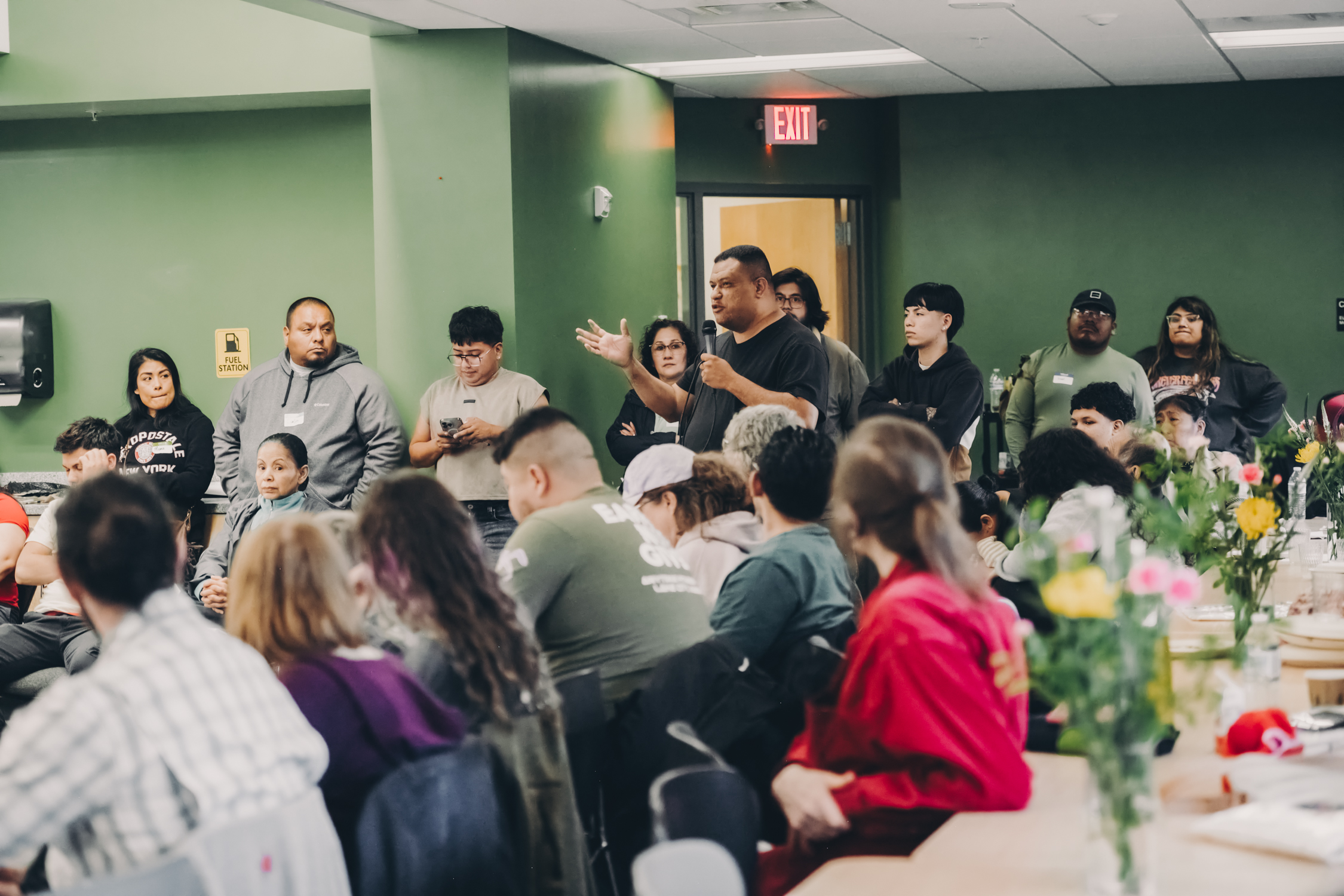
The parking lot was full. People seemed to appear out of nowhere. Nearly 120 people showed up for this community gathering we call “The Asamblea”— immigrant families, constitutional observers, and WSCO staff. As they all made their way into the room, everyone found a spot to settle in around the edges, leaving the center open for an altar: candles, flowers, a quiet reminder of what brought us here and who we carry with us.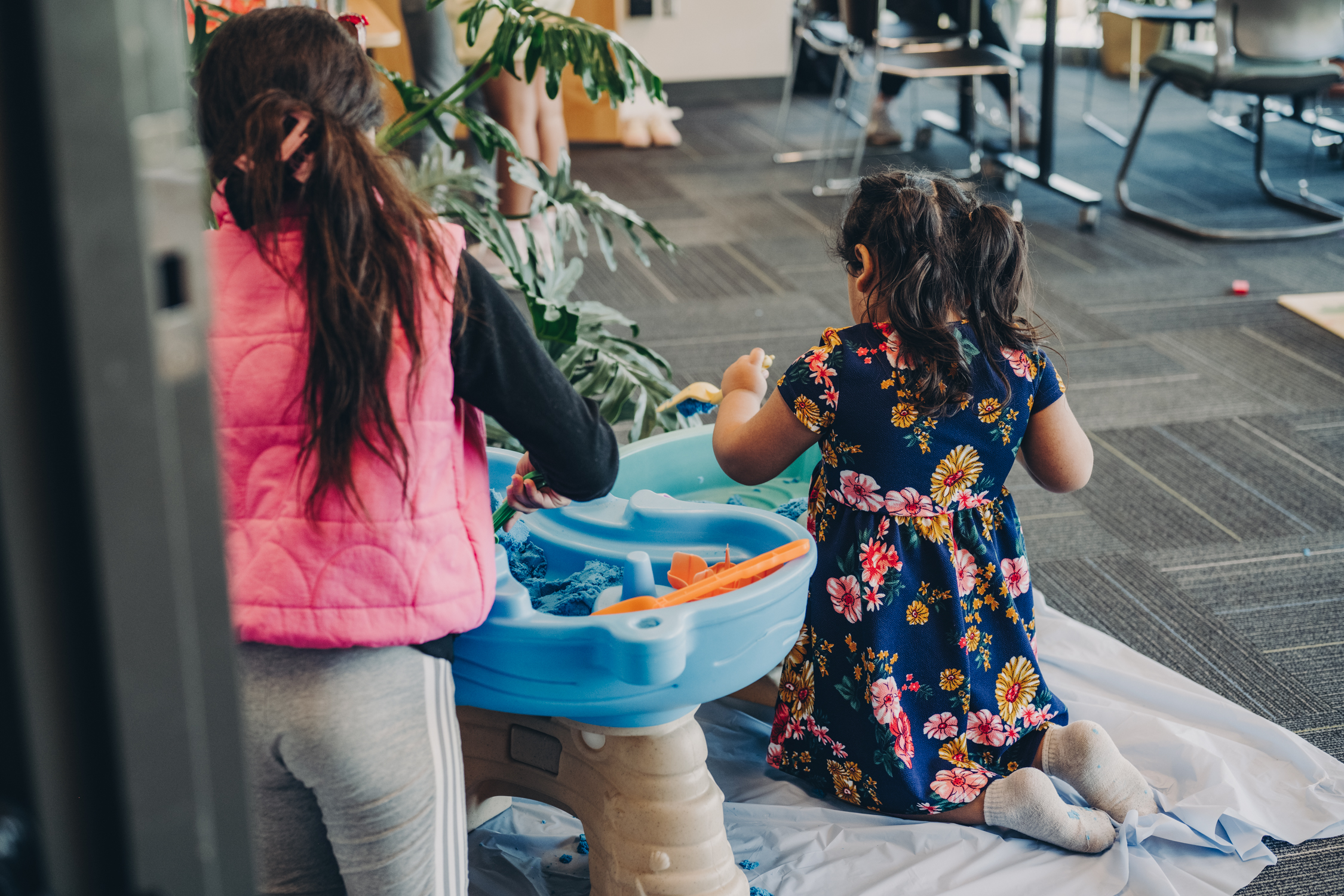
Children were ushered into a separate space with two bouncy houses, activities, and several childcare workers. Supported by St. Paul Parks and Rec, we held space for the littlest West Siders, so their parents could be fully present inside.
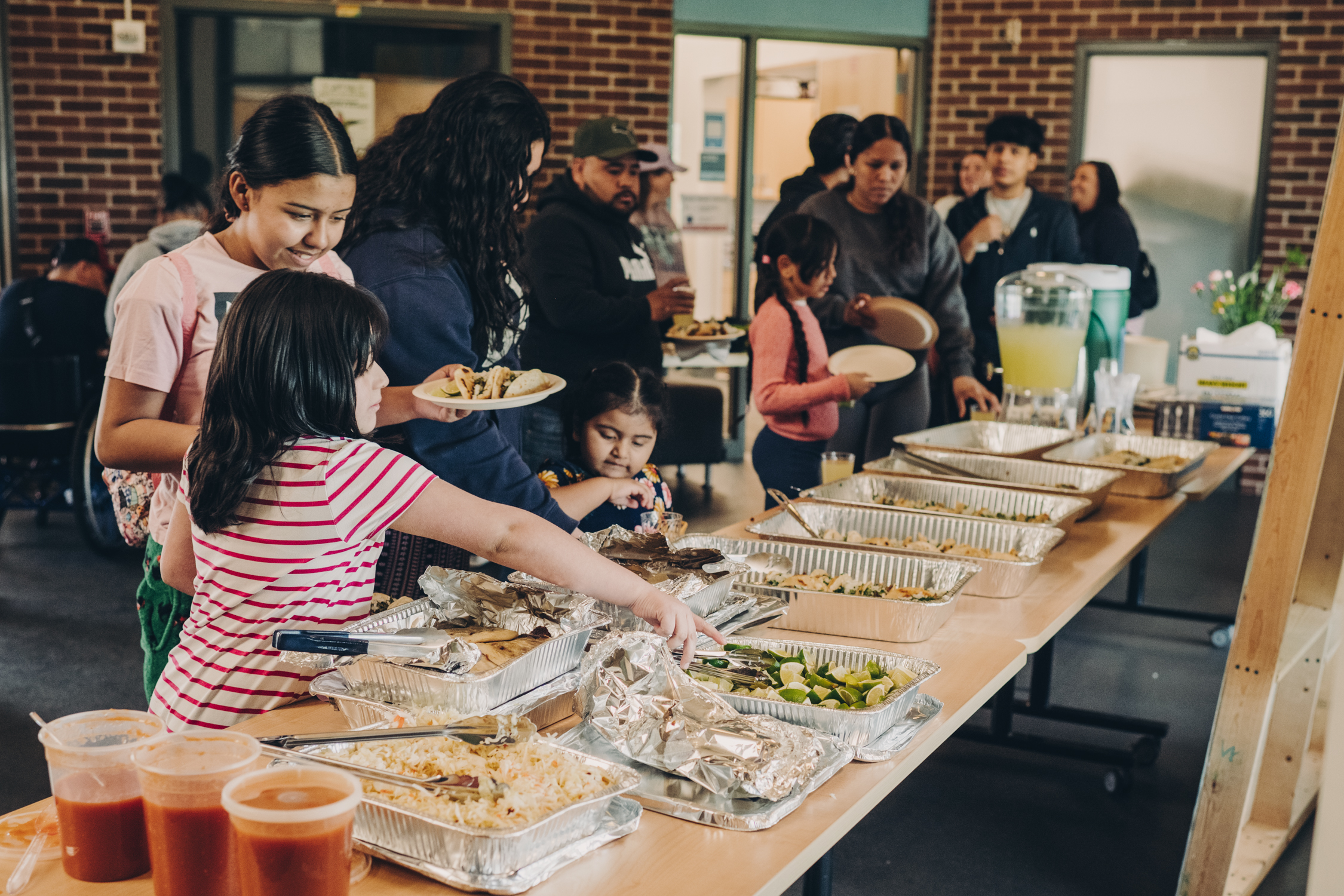 Food was catered by El Charrito, a West Side restaurant that had to close its doors during the occupation. Owner Mauricio was there himself — present and representing, like so many others who had shown up throughout the crisis.
The event opened with introductions. All of them. Approximately 100 people said their names, where they came from, and how Operation Metro Surge had impacted their lives. It took a long time. It was exactly right. People had immigrated from roughly ten countries to be in that room. And for many of them, it was the first time they had said any of this out loud — to people who understood.
The Asamblea was, above all, an act of listening. Story after story, the room held what so many families had been carrying alone for months. And somewhere in that collective witnessing, something shifted. Many participants shared that it was the first time they hadn't felt alone since the surge began. The event ended the way the best ones do: with song. Voices together, filling the room.
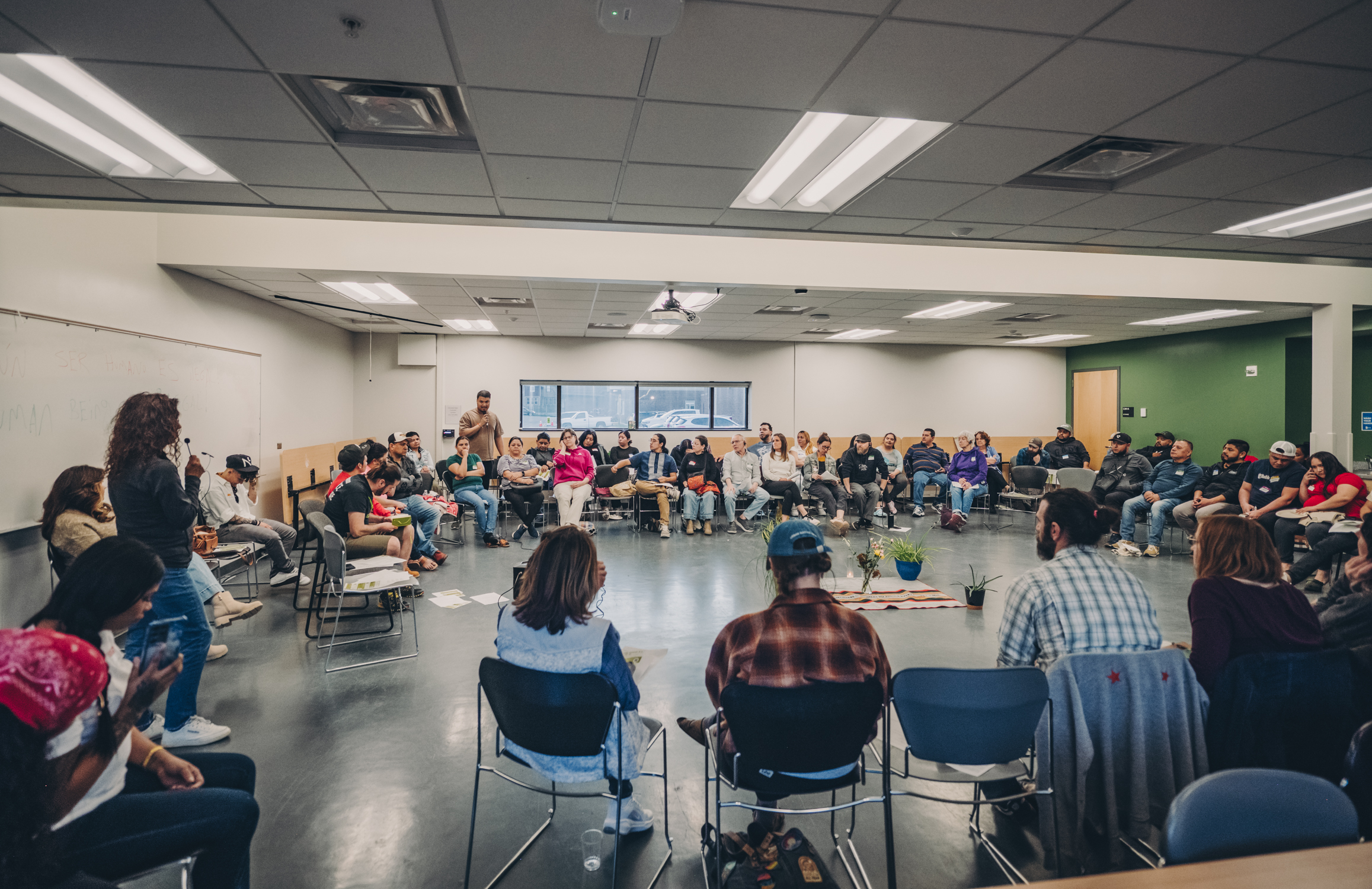 Out of that night came a clear, collective desire to keep going — through more asambleas, know-your-rights trainings, legal clinics, role-play scenarios for police encounters, protected park playdates, potlucks, and the kind of deep, familial friendships that hold a community together long after the crisis has passed.
Many of the families at the asamblea had also been supported by WSCO's Rent Assistance Fund, one of the most intensive mutual aid efforts in our organization's history. Over the past three months, WSCO supported 200 people across 67 families. The majority were single mothers. Nearly all had lost their jobs during the occupation. More than half had experienced or directly witnessed the detention of a colleague, neighbor, or loved one. A handful gave birth during those months.
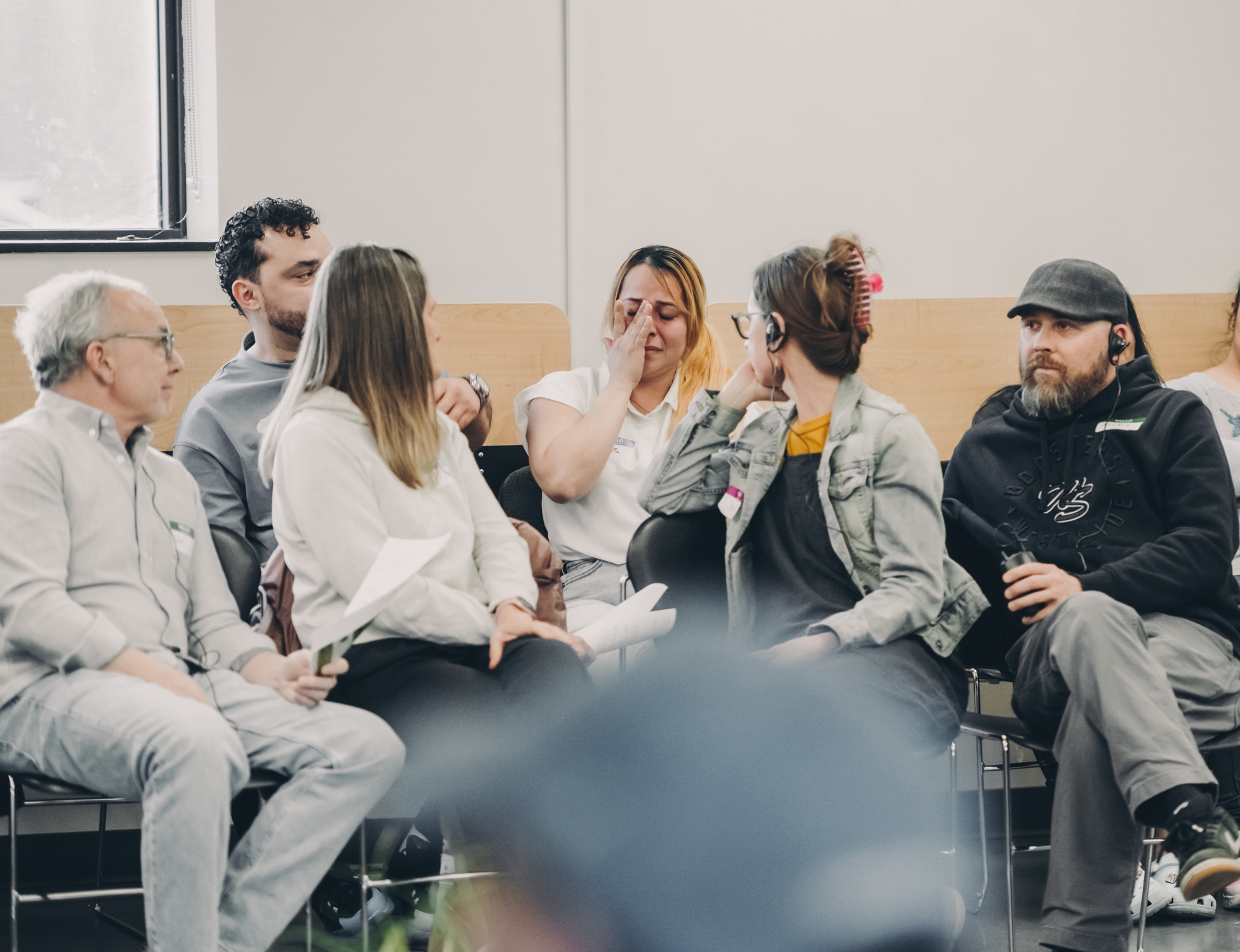 WSCO and community members stepped in: rides, months of rent, food, medical assistance delivered to homes, rideshares, legal pathways, and direct connections for families separated from their children for safety. Staff stopped more than 60 evictions, built new relationships with landlords to create informal safety nets, supported people navigating ankle monitoring and ICE check-ins, and helped families locked out of income by running mutual aid food networks.
Two tenant unions were built from the ground up. At the height of the occupation, WSCO convened a tenant union meeting that resulted in real repairs and direct landlord-tenant negotiations. That work didn't end when the surge slowed — it became the foundation for something bigger.
The rent fund has now seeded a new long-term program. This first gathering drew more than 120 people who had spent months in isolation—and finally came together to begin healing. The vision is larger than emergency response. WSCO is building this Asamblea as a bedrock of working-class renter democracy on the West Side: a permanent structure for organizing, healing, and self-determination that will outlast any single crisis.
The Public Denunciation: Turning Community Power into Policy
Throughout the ICE surge, community members experienced extreme hardships and also showed up for each other in remarkable ways. Those stories are not only part of our personal lives—they are critical to the public record, essential information to shape change so that current harms can be addressed and future generations never face the same conditions.
On Day 3 of the Week of Action, we convened local and state elected officials who have the power to change the policies that left our communities at risk and create new laws and settlements that can repair the harms to our families and businesses. Over the course of the evening, six residents shared their experiences with their community and Mayor Kaohly Her, City Council President Rebecca Noecker, Representative Maria Isa Perez-Vega and Attorney General Keith Ellison.
“At WSCO, we’re deeply grounded in community,” Monica Bravo, WSCO’s Executive Director, said at the start. “We believe that when we’re organized, we have the power to shape our own destiny. In early October, we launched the Hummingbird Initiative, and tonight we hold space for the lived experiences of those impacted by Metro Surge to bear witness to the harm and the terror but also to the incredible unity that kept us standing.”
The first speaker shared that he’s been working in Minnesota as a delivery driver for four years and had friends abducted by ICE in his presence. He estimated that 70% of his peers were detained by ICE and many families are now left without their main provider. “It’s difficult as an adult to live in fear and, even when you’re in your home, think someone might come and knock on your door or window,” he said. “Even though it’s not happening anymore, we have to live with what happened. I may have a smiling face but, on the inside, I’m still living in fear.”
The second speaker shared how his family put plastic over the windows to shield themselves from ICE drones — and didn’t leave even when he needed to go to the hospital. “I had this pain in my chest and wanted to call the ambulance but I didn’t know if they would help me or do me harm,” he said. “So I refused to get medical attention and stayed home. My son and wife took care of me but it was a very traumatic experience… I still believe the police are working with ICE. People have been taken because they wouldn’t give their IDs to police and they turned them over to ICE. It needs to stop… It’s been a surprise to go through this experience in this county; to be treated like we’re not worth anything.”
Santino Franco resonated with that feeling. A lifelong West Sider, he shared that his grandfather came from Texas in 1962 and worked as a meat packer. He still remembers his family driving down main streets on Saturday morning when he was six years old and his grandpa says, “We can’t eat there, we can’t eat there, because we’re Mexican.”
“So I experienced a little bit of that as a kid, but to have the Supreme Court say it’s okay to pull you over because your brown or stop you because you’re talking Spanish or you live in a community that has immigrants in it, that made me feel like I was six years old again with my grandpa saying, ‘We can’t go there,’” he said. “But, you know what? We go wherever we want... On the West Side, we’re resilient. We always have been. And [when ICE came] we stood up and, with the help of all the observers, we turned all that negativity into something else. We turned it into hope.”
For Jolene, a West Sider and constitutional observer, that hope came from community—not the institutions that are supposed to protect residents’ rights. She shared a terrifying experience during which she was effectively held hostage in her car by federal officials for nearly 20 minutes for simply being a peaceful observer. She had a gun pointed at her, and was called a ‘lunatic’ by an officer wearing a hat that said ‘After this, we eat tacos’—and called for police to come to her aid.
“I called 911 three times,” she said. “Over the course of three calls, I was told more than 13 times that they were on the way. They never came. Not once. But my neighbors came. Unarmed and without authority, without protection, they showed up with whistles and voices and presence. And that’s what kept us safe… This was not an isolated incident; it’s part of a pattern and that pattern demands policy change. I’m asking all my elected officials not for acknowledgement or sympathy but for action.”
For Milissa Silva, a key aspect of that action is supporting the small businesses that make the West Side a cultural destination. The owner of El Burrito Mercado, which opened in 1979, Silva-Diaz described the incredible partnerships that supported the workers and business through Operation Metro Surge, from community members driving employees to work to a barber doing haircuts for workers in the basement of the business.
“All of us did this together while living in a constant state of vigilance and paranoia—and the toll is something that we may never fully recover from,” she said. “The impact on our business started in 2025, when our sales were down 4% after having been on a steady upward trajectory. Then, Operation Metro Surge changed everything. We’re no longer open the same hours. We’re still evaluating our entire grocery business. Our customer traffic is down 10 to 15% and we’re not seeing a lot of our longtime customers. We’ve gone from 90 employees to 70 because of the decline in business and because some employees were too scared to come back to work.”
“What makes the businesses on this corridor successful is what makes them unique,” she continued. “Too often grant programs are one-size-fits-all and it just doesn’t work. The West Side is special; no other community shows up the way we do. [Looking at elected officials] You’re lucky to have a community like ours. I urge you, please, help us protect it. We have to prioritize cultural and historic preservation. If nothing is done, we risk losing something that cannot be replaced.”
In response, elected officials shared some of their efforts to respond to the harms of Operation Metro Surge.
↳ Representative Maria Isa Perez-Vega lifted up several pieces of legislation at the state Capitol, including HF 4351 and HF 4076, which would create a program and grants for culturally responsive mental health services for adults and children; and HF 4342, which would provide financial relief for impacted small businesses.
↳ City Council President Rebecca Noecker shared information on the city’s efforts, including working with the Attorney General to include Saint Paul in ongoing lawsuits; working with Ramsey County to give businesses a property tax extension; banning masking and prohibiting ICE from staging in municipal parking lots; re-directing $1.42 million to the city’s emergency rent assistance program; and passing a stronger separation ordinance to ensure that all residents, regardless of status, have the ability to access essential city services without fear of being turned over to ICE.
↳ Attorney General Keith Ellison outlined how the state is suing the federal government under the 10th Amendment for damages brought by the impact of ICE, while also investigating potential criminal cases, like that of a North Minneapolis resident who was shot by federal agents.
↳ Mayor Kaohly Her shared her advocacy at the capitol for relief and response bills and past and ongoing discussions with the police department about response and how to work with community more effectively.
However, given limited time, community members had many unanswered questions. WSCO has shared these questions with elected leaders and is committed to pursuing responses. Questions included:
|
Where Were You This Winter? |
|
|
You have the power of the state. We do not. Federal agents have to follow state and local laws unless it’s necessary and proper to break it in the course of carrying out federal law. You have the responsibility to ensure they follow it and to enforce it. You did not. My fellow observers put their lives on the line to protect our communities. Where were you? What if anything will you do differently if/when this happens again? |
|
|
Why is this meeting happening now? Where were elected city and state officials 3 to 4 months ago? Where was the city when our neighbors stepped up and took vulnerable individuals to school or work? Where was the city when parents and church members were patrolling street corners at schools? Where was the city during food drives? We were there. Where were you? |
|
|
We are living in extraordinary times that demand more than just status quo. Being the bigger person often means just staying silent. How are YOU actually going to take a stand for our community, our shared humanity? |
|
|
Saint Paul Police Department: |
|
|
Why was the Saint Paul Police Chief Axel Henry so silent during the ICE surge? |
|
|
How do we have more accountability from law enforcement to not cooperate with ICE, to respond on behalf of our neighbors when they are needed, to get accountability for illegal actions by ICE? |
|
|
There has been increased St. Paul Police activity on the West Side since operation metro surge. How can the community trust that the ICE surge did not lay the groundwork for police action? |
|
|
How do we regain the trust of our St. Paul police when they did not respond to ICE calls? |
|
Local Government Power: |
|
|
What is something the government in MN can do for families who were under excessive force use by ICE or other abuses by them? |
|
|
What authority does the state have to regulate (or ban) the tactics used by federal agents? If the answer is little or none, are there any creative ways to indirectly affect these tactics? |
|
Detention: |
|
|
How many Minnesotans are currently in detention facilities domestically and abroad? |
|
Voter Safety: |
|
|
How are we protecting our people as they go out to vote this fall? |
|
|
How can we prepare for the midterm elections? In our community? At the polls in our neighborhoods? |
|
Other: |
|
|
What kind of interventions can the city/county/state provide to families to address their mental health, especially with no insurance? |
|
|
Last year the Boosters requested additional money for security at the cinco de mayo and they were denied funding (for saint paul police). Will there be allocated funds from the city of saint paul for SPPD security this year? |
|
|
Are the prosecutions for the Alex Pretti and Renee Good murders moving forward at the state level? |
Answers to these questions from our elected officials will be shared by WSCO early June 2026.
West Siders for Environmental Justice Neighborhood Tour
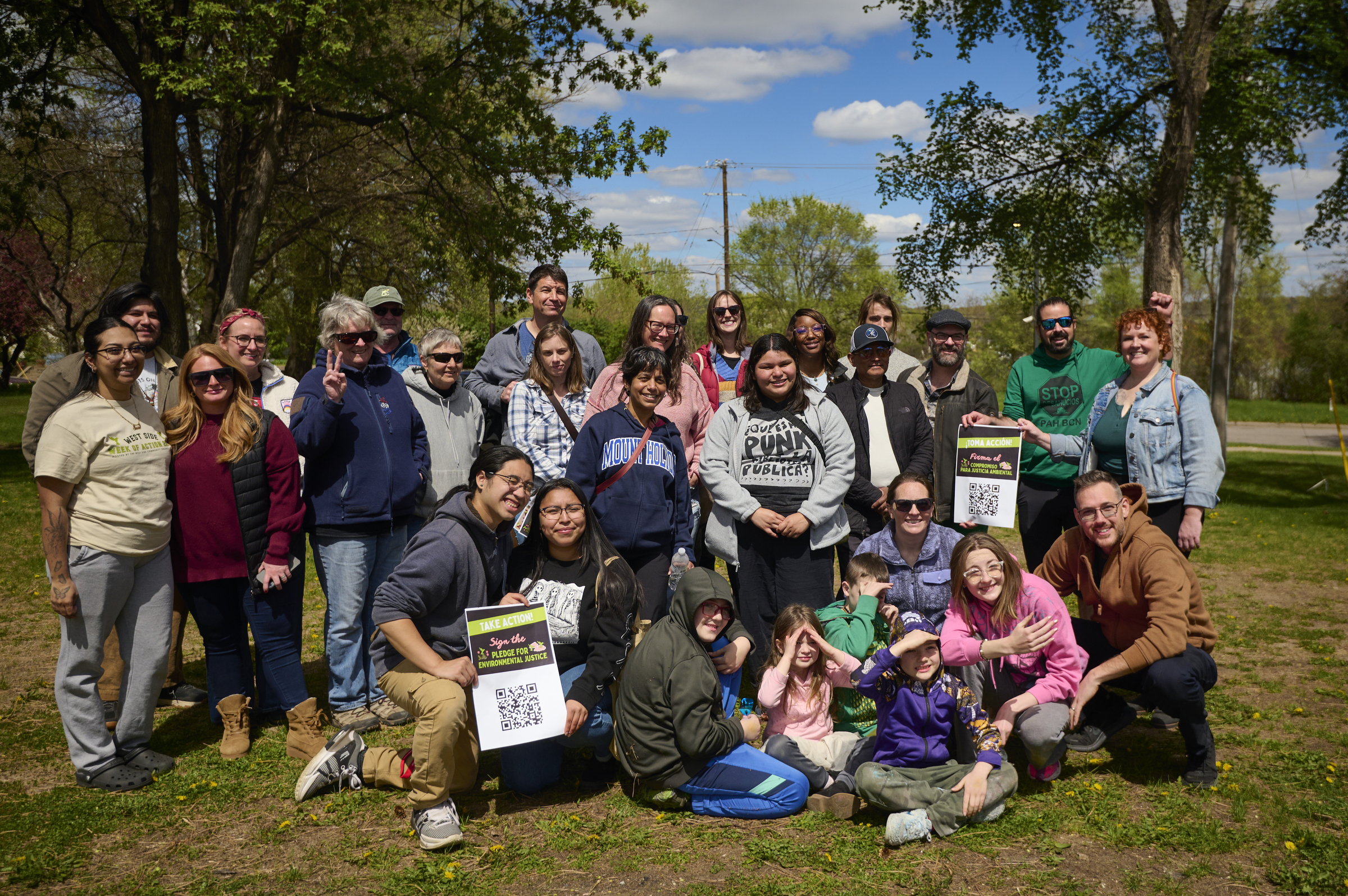
From the bluffs to the flats, all West Siders deserve clean air, safe streets and healthy futures. But right now, neighbors near the Southport industrial District are breathing air that state agencies agree is hazardous.
Trucks and trains regularly block the only roads in and out of the neighborhood, spewing diesel emissions and creating congestion that can last for hours. The intense noise and vibrations from the industrial activity shake residents’ homes, cracking foundations and disturbing the peace.
Just like West Siders have shown up to protect our neighbors from ICE, area residents have come together over the past year to protect themselves and their families from the environmental harms that have been in our community for decades now. To close out our Week of Action, campaign leaders took fellow West Siders and other concerned community members on a walking tour, highlighting the challenges they face everyday — and what they’re doing to make their neighborhood safe and healthy for themselves and generations to come.
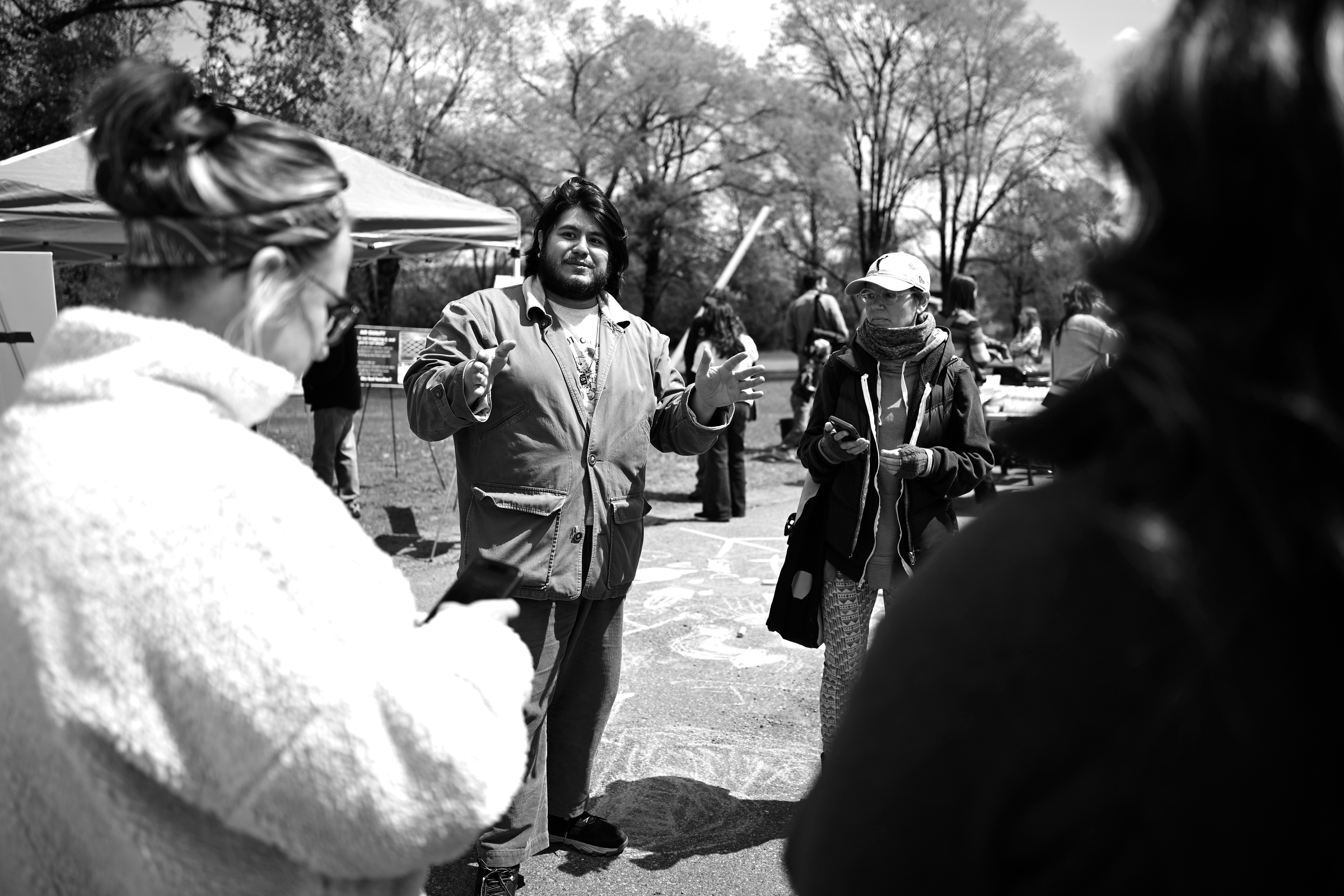
At the start of the tour, WSCO organizer Miguel Brito shared the legacy of injustice that started decades ago. Before it was paved over with storage yards, chemical labs, and processing facilities, the West Side Flats was a vibrant, diverse community for generations. But instead of protecting that neighborhood from flooding, Brito said, the City of Saint Paul chose to forcibly remove those families and businesses in the 1960s to construct the 99-acre Southport Industrial District. But the injustice didn’t end there.
While the families on the Flats were forced out, this area has remained a West Side neighborhood—home to families, students, and churchgoers. Residents feel isolated and trapped by the industrial conditions that have created toxic air, persistent dust, hours-long traffic jams, noises that literally shake their homes and so much more. That’s why neighbors in this area have come together to form West Siders for Environmental Justice. Over the past year, the group has identified common concerns and set a shared vision for change.
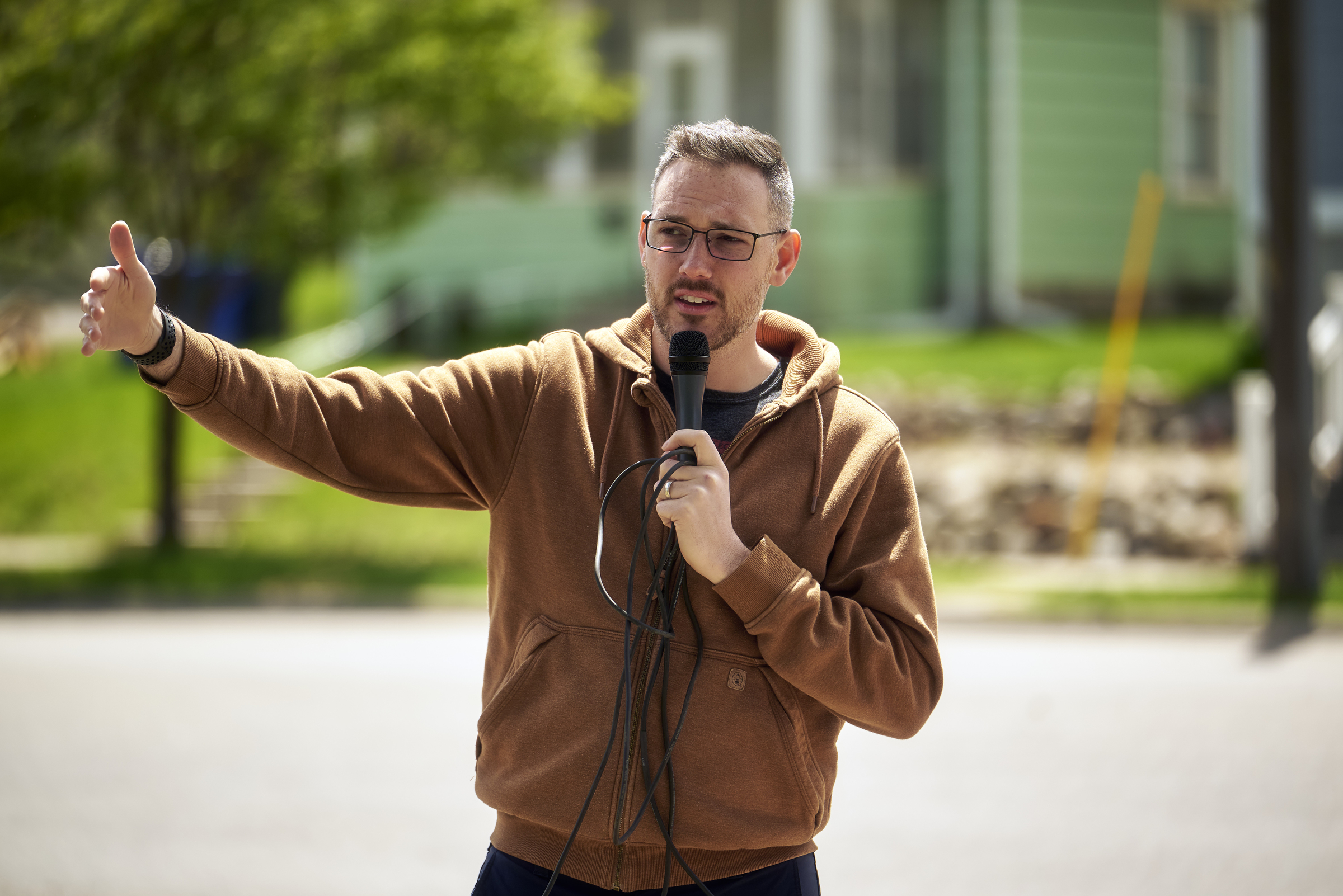 To kick off the tour, Phil Holmer, a member of the Leadership Committee, had to shout to compete with the roaring noise of semi trucks passing every few moments, coming in and out of the industrial district. He pointed to his home, where he lives with his wife and five young kids.
“I don't have a place to walk and clear my head without having to put something in my ears, which is really hard,” he said. “And how do I teach my kids to bike? I can't.”
Just down the block Samantha Sanchez, another leadership committee member, shared a story that’s become all too common for area residents who often get trapped for hours because trucks and trains block the one street that provides access to their homes.
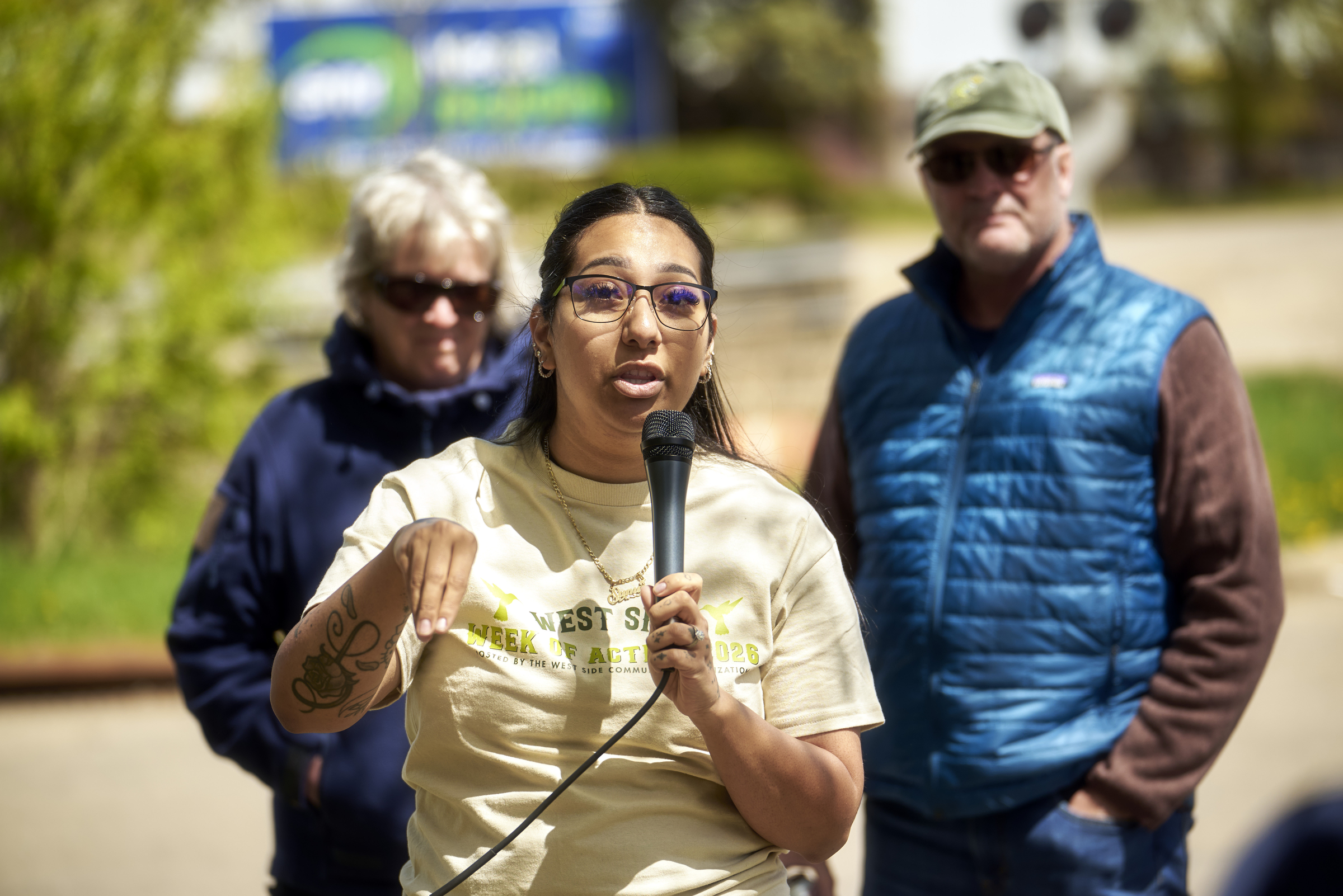 “I was on my way back home from dropping off diapers to my son’s daycare and Concord was backed up because of a train passing,” she said. “I was surrounded in all four directions with massive semi trucks. There was no way to get around them so I’m stuck there with toxic fumes coming into my car. At least 45 minutes passed and we were all in the same spot. I was furious. I don’t live even 5 minutes away and I had no idea when I would make it home. Time went on. An hour and 25 minutes. 2 hours. I was beyond furious. I moved my car to the shoulder of the exit on Concord, and I walked myself home.”
Adding to Samantha’s story, Chloe Krenz noted that it’s not just frustrating but dangerous to have such consistent and extended traffic jams. “What if we need an emergency vehicle?” she said. “If we have trucks backed up in both directions, you can't get in or out. And there are a lot of times that people try to go around the trucks and cut through on the wrong side of the road. This is a big safety issue. What we need is another access point into the neighborhood.”
As the tour continued down the road adjacent to the industrial district they saw a rusted-out, large metal appliance left on the street — evidence of the illegal dumping that’s all too common in the neighborhood. Stopping at a clearing in the trees, the group could catch a glimpse of the activity on the other side of the fence, witnessing a giant crane move tangled strands of metal.
As the tour group took in the noise and odors, Katie Gutierrez described how it impacts her every day — living right next to the railroad tracks and fenceline.
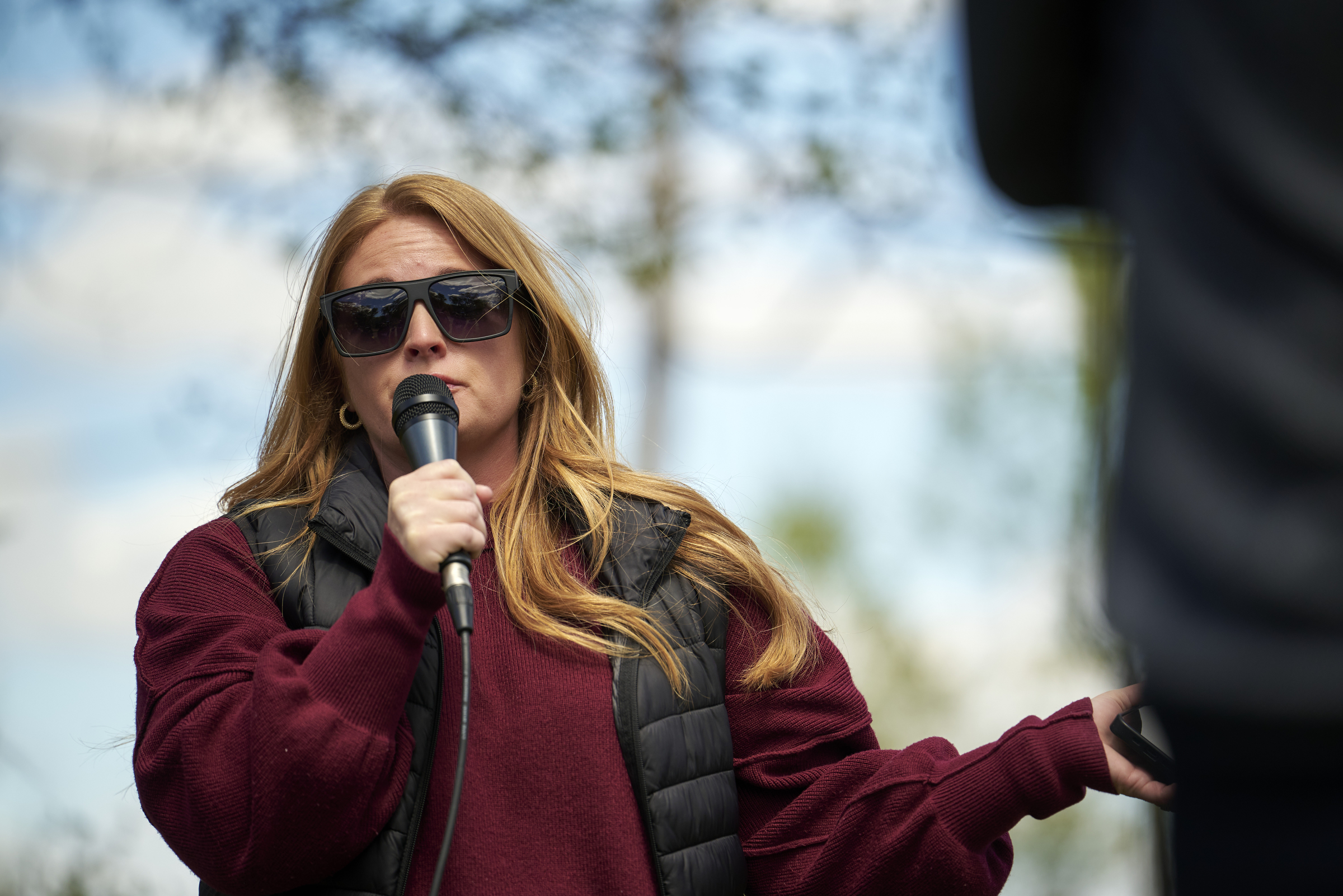 “Our home has a lot of history,” she said. “It’s the house my husband grew up in. So my father in law has been battling with these companies for over 35 years. And now we've taken it on… Typically, our homes are shaking. The windows are rattling. I am in a completely different area of my home, and I can hear glasses in my kitchen cabinet rattling and clinking together. You can't open your windows because it fills your home with dust and the odor of whatever's burning… I don't have any peace of mind sending my children outside to play, and I have two little boys that should be outside all day. When they are outside, I'm scared, I'm angry, I'm stressed out, thinking ‘What's going to potentially happen to them in the future because of this environment?’”
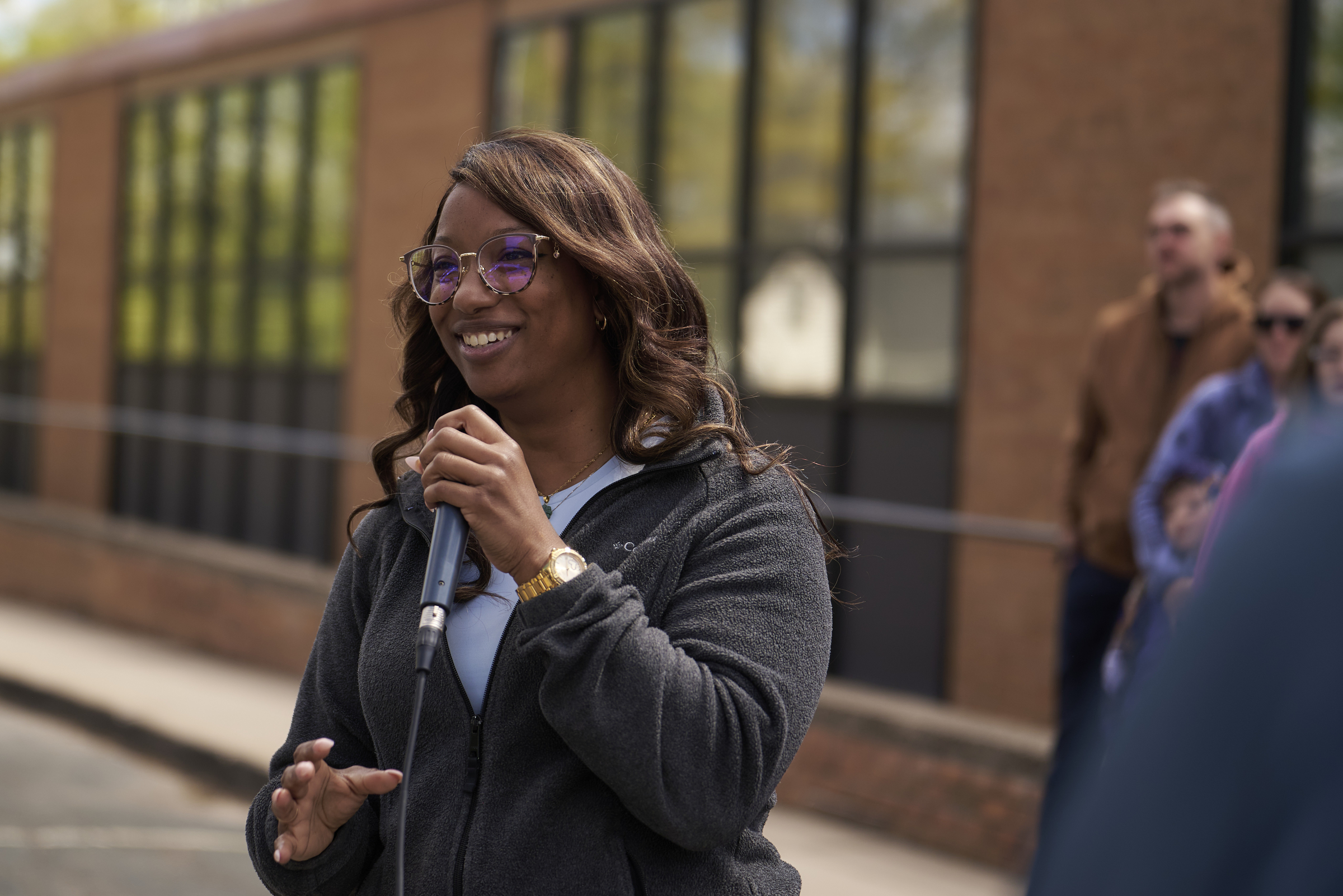 Jazzalyn Baker, another neighbor on the Leadership Committee, shared the same fears about her family’s health. “Back in 2022, I noticed I started getting more migraines when we moved here,” she said. “I have three kids and I’ve been having to take one of my boys to urgent care more often, which is pricey. And, my second oldest has asthma—and the environment affects him a lot—so we always have to give him nebulizers and take him to the doctor.”
Now that they’re organized, though, the West Siders for Environmental Justice have a new vision — and clear action steps.
“We’re going to be doing everything that we can to let people know that this isn't healthy,” Jazzalyn said. “We want a better quality of life. We want people to be held accountable. And, in a perfect world, we don't want these industries here, to be honest. In a perfect world, we would want that turned into something else as community based.”
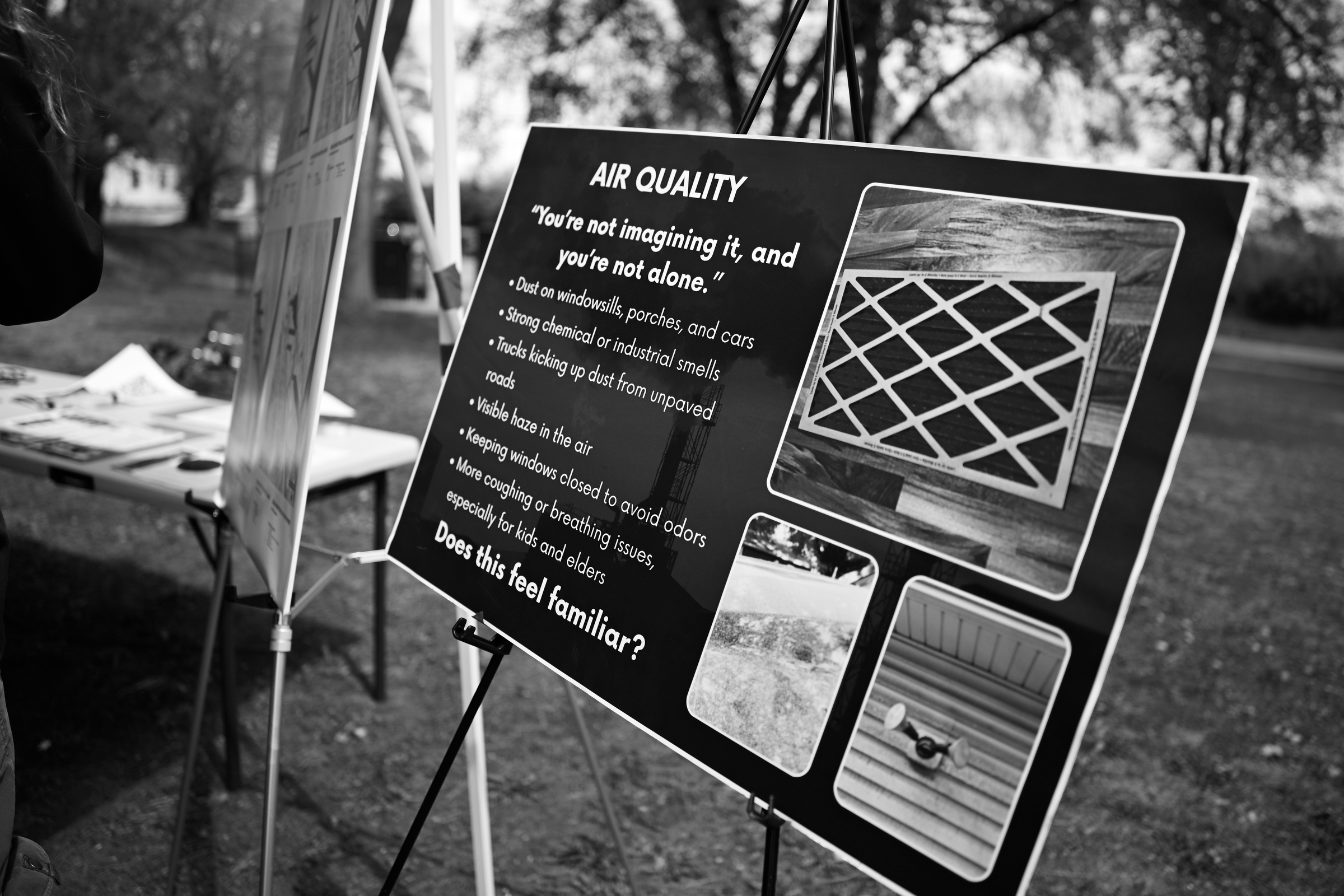 Already, WSEJ has had significant wins. They’ve brought together more than 60 residents on just three streets for collective meetings. They’ve secured new, active air quality monitors, distributed safety and emergency equipment to area residents and built relationships with key agencies like the Minnesota Pollution Control Agency and the Ward 2 City Council office.
Together they’ve laid out a powerful, community-led plan to make sure everyone on the West Side community can breathe easy, including near term goals for 2026 including:
↳ Passing noise, dust and odor mitigation ordinances at the city council
↳ Securing stronger municipal enforcement of illegal dumping
↳ Installing a noise sensor to track the health impacts of auditory disruptions
↳ And develop tangible plans for an alternative route in and out of the neighborhood
But the Southport Industrial District doesn’t just impact those living next door. It impacts all of us on the West Side. Take the WSEJ Pledge to show your support—and commit to showing up for environmental justice!
Weigh In on What a Redesigned Robert Street Will Look Like!
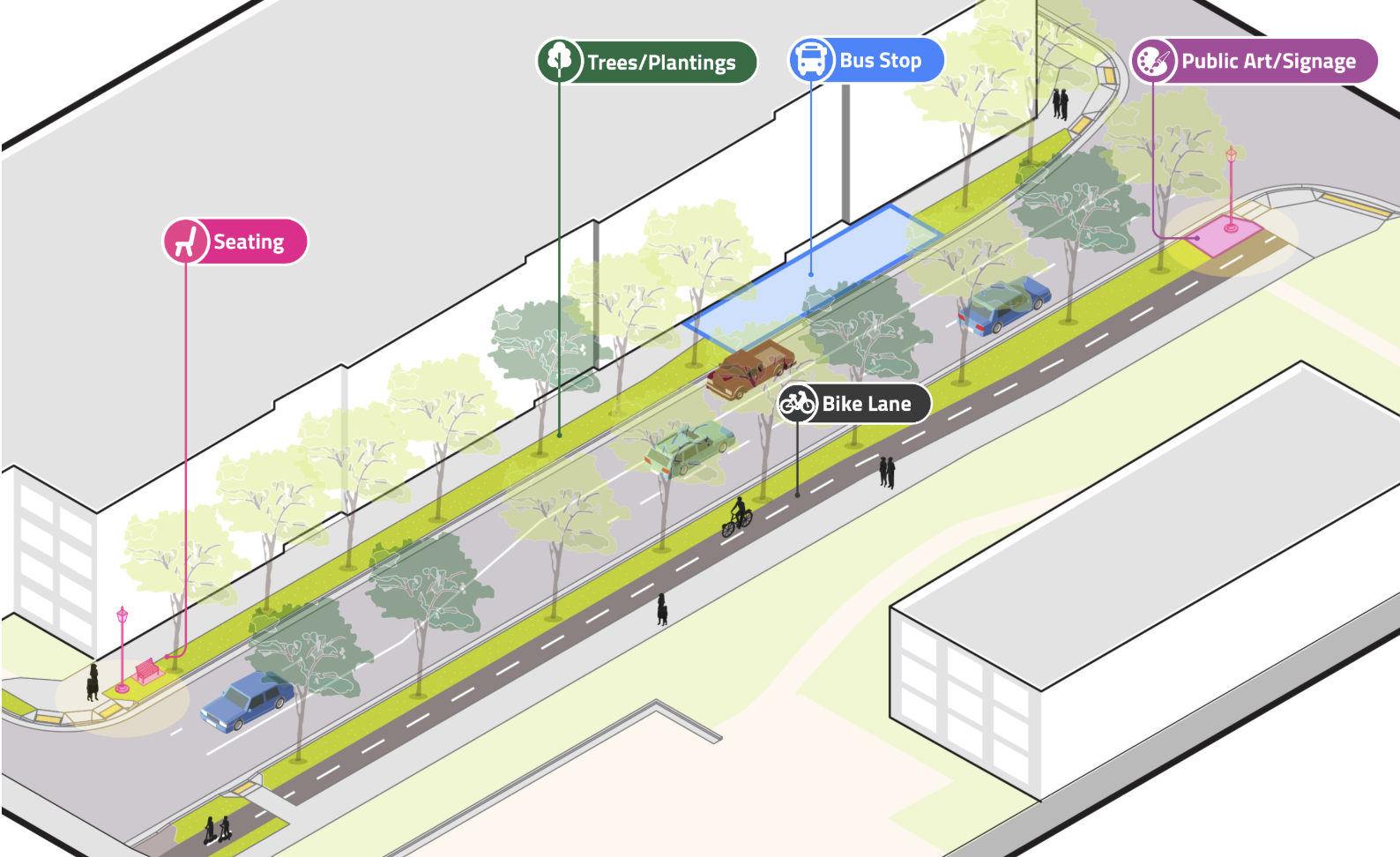
It’s been nearly 100 years since Robert Street — a major corridor in our community — was significantly updated. Instead of speeding traffic and crumbling pavement, we deserve a safe and vibrant street that boosts our local businesses and makes it easy for all of us to get around.
But, in the past, we’ve seen how these types of public investments don’t benefit us. Big transportation projects disrupt our daily lives and, too often, they displace our neighbors and shutter our local businesses. That’s why WSCO has engaged hundreds of neighbors around the Minnesota Department of Transportation’s reconstruction of Robert Street.
Now is another critical moment for input: Take the Visual Quality Survey to help shape what Robert Street will look like in the future!
We know that many of you have already engaged around the Robert Street project, providing essential insight into our community vision for the street. In 2025, WSCO’s Robert Street Survey engaged nearly 230 residents to ensure our ideas are represented in the planning and feedback process. We also collaborated with the UMN Design Center team to conduct 7 community engagement events to map community priorities for the project, getting feedback from more than 300 participants.
So we already know that West Siders want:
-
- environmentally friendly and beautiful public spaces including: parks, gardens, places to rest and sit, performance and entertainment spaces, playgrounds and more
- improved safety and traffic flow
- to amplify the cultural identity of the West Side and instill pride through murals and wayfinding to showcase the community’s many assets
Through the Robert Street Accountability Taskforce we made sure that the contractors working on the Visual Quality plan—the natural and built features that shape how a corridor looks and feels—received and responded to the input West Siders have already provided. Because of your feedback, the proposed design includes more plants and grass, more public seating, space for public art and opportunities to highlight the history of the area.
But the process isn’t over yet. Please take the Robert St. visual quality survey to review the design options and provide your input. Your feedback will help ensure the final visual quality recommendations reflect community needs and priorities.
The survey is available through Tuesday, May 26, and can be accessed in English and Spanish.
Neighbors Fight for Environmental Justice on the West Side
 When the United States celebrated Earth Day for the first time in 1970, dozens of families on the West Side Flats had just been forcibly removed from their vibrant, diverse neighborhood by the City of Saint Paul to make way for the Southport Industrial District.
Since the 1970s, industrial activity and traffic in and out of Southport has steadily increased — trucks, barges, major highway, and rail all converging on a neighborhood that is also home to families, a school, and a church. Over the years, neighbors have come together to fight for environmental justice, including blocking an asphalt plant, stopping a car shredding facility and advocating for the planting of more trees.
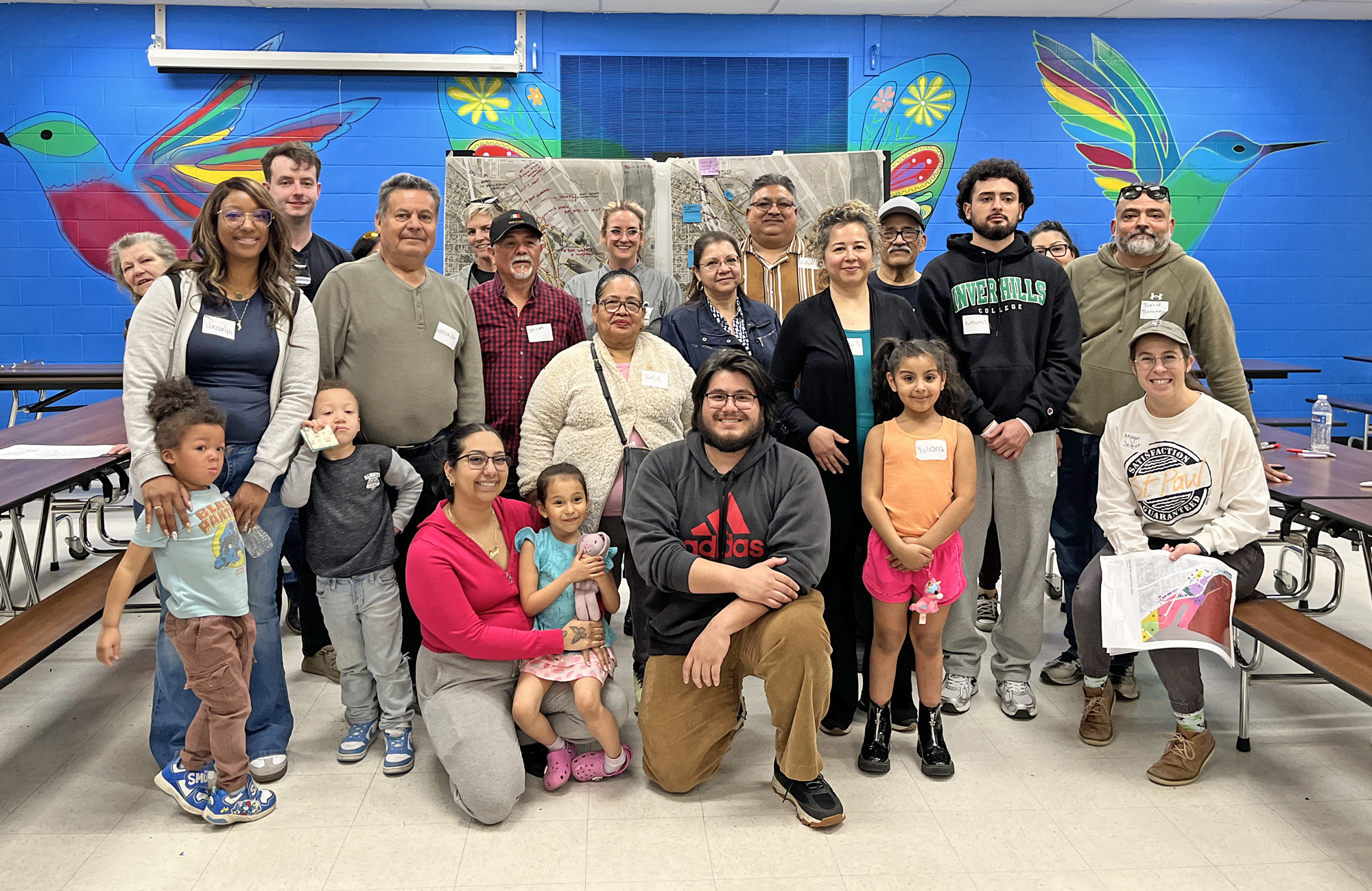
Building on that legacy, a new generation of neighborhood leaders began organizing with WSCO in 2025, coming together week after week to discuss serious concerns about respiratory health disparities, recurring traffic jams, disruptive noise and the continuing injustice of displacement.
This Earth Week, we're introducing you to some of key leaders advancing the new West Siders for Environmental Justice campaign. Learn more about the group's work on May 1 from 12 to 4 p.m. during our Week of Action!
St. Paul's West Side organizes against ICE surge and environmental injustice
The West Side has spent the last year showing up – for our immigrant neighbors, for our families facing environmental injustice, for everyone who has ever felt like the systems around them weren't built with them in mind. The West Side Week of Action is our moment to take stock of what we've built, honor what our community has endured, and make clear: we are not going back to business as usual.
WSCO has been quietly building something powerful. And throughout the final week of April, we bring it into the open. We are lifting up the work, amplifying our demands, and ensuring the people in the positions to create change can no longer look away.
This week holds a particular focus on immigration and environmental justice. It is focused on the families living near the Southport industrial area breathing air that shouldn't be breathed, and the neighbors who showed up for each other when ICE came to our streets. It is focused on what comes next: the legislation, policy, accountability, and community plans that turn this moment into lasting change.
Day 1: Constitutional Observer Training
The Hummingbird Initiative is a WSCO project connecting Saint Paul's West Side community with trusted immigration information, legal resources, and rapid response support — grounded in collective care, preparedness, and community safety. The campaign was launched in response to the aggressive tactics carried out by ICE in Chicago during Operation Midway Blitz. We recognized that our state—and our neighborhood in particular—would eventually become a target for these unconstitutional attacks. With approximately 16% of our residents being foreign-born and 53% being people of color, the West Side was especially at risk.
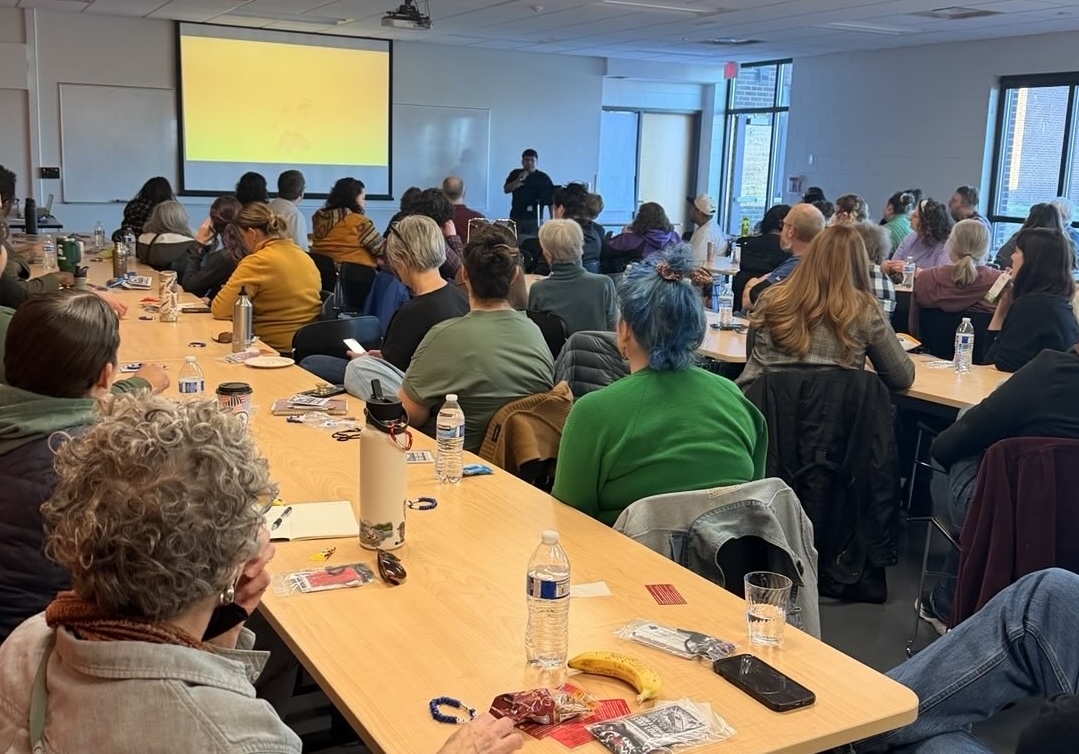 Since October 2025, WSCO has held monthly bystander trainings focused on community response to immigration enforcement activity. The goal of our Hummingbird Initiative trainings have been to ensure community members have accurate information and practical tools to respond collectively and effectively when ICE activity occurs — rooted in safety, dignity, and mutual care.
On Monday, April 27, WSCO is hosting a Constitutional Observer training for West Side residents (ZIP code 55107). Constitutional observation has been a powerful and effective tool for our community to hold immigration and law enforcement accountable. While ICE activity in Minnesota may have slowed, mass deportation has not stopped. We must stay ready. WSCO remains committed to training as many 55107 residents as possible, and will continue to hold onboarding trainings throughout the year — each one a stepping stone to deeper involvement in Hummingbird Initiative efforts.
We keep us safe.
Day 2: A Space to Heal and Build Together
In response to the economic impacts our community faced during Operation Metro Surge, WSCO created the West Side Rent Assistance Fund. So far, we have distributed over $140,000 in rent aid to families in Saint Paul — the strong majority of them being immigrant, West Side residents.
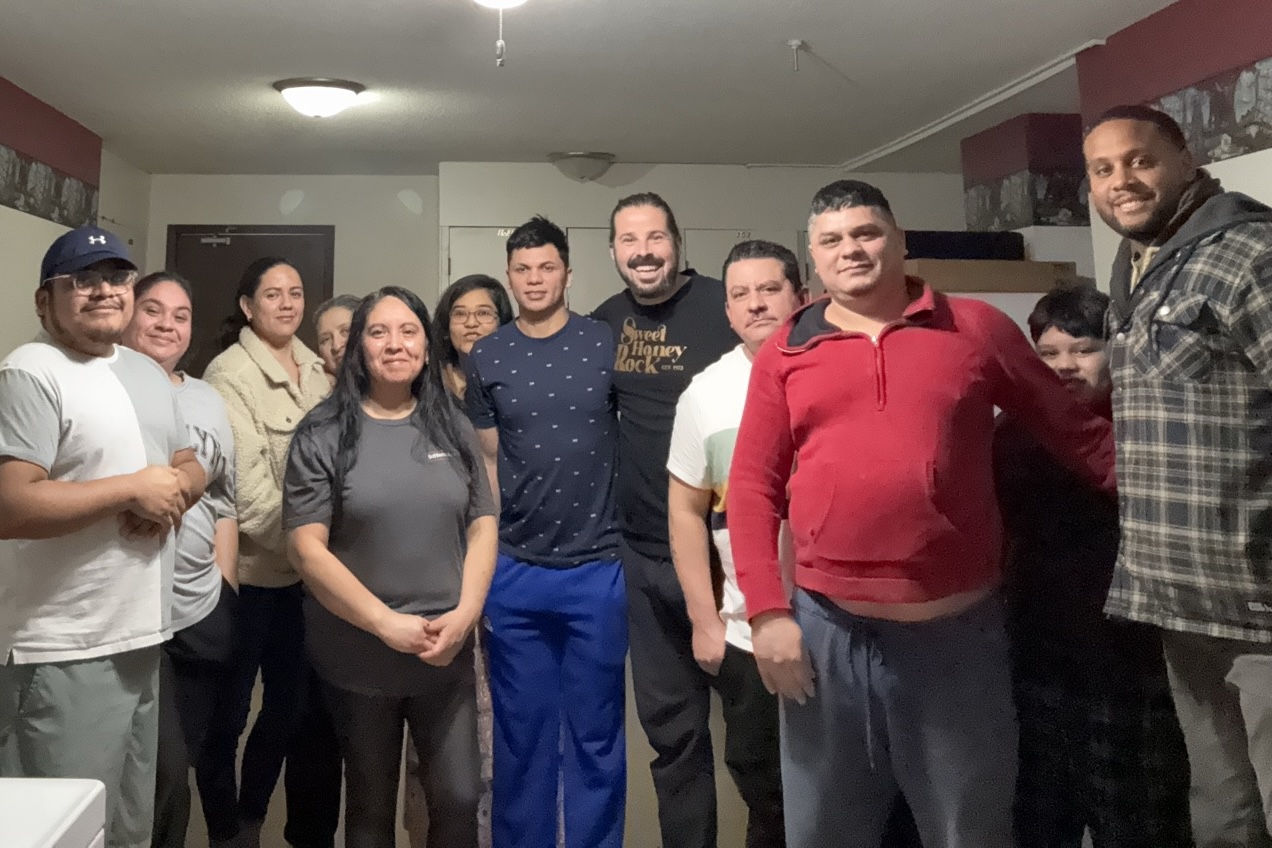 Our process in distributing these funds has been very intentional and relational. It's not just about lending a hand, but about linking arms. Our staff has made every effort to meet with each of these families one-on-one to hear their remarkable stories, break bread, and share how they can be part of creating change through grassroots organizing. We remind them that they are not alone — that the support they're receiving comes from hundreds of others who care deeply about them.
So many West Side residents — through The Hummingbird Initiative and beyond — stepped up to show up for their immigrant neighbors. They recognized that the power and privilege they hold is not something to set aside, but something to put to work — in service of those most directly impacted, and in solidarity with a community that belongs to all of us.
On Tuesday, April 28, WSCO is bringing these two groups together in one space. This gathering is an opportunity to listen more deeply to the needs of families directly affected by the occupation, and to build together toward what comes next. It will be a safe space for impacted families and trained observers from The Hummingbird Initiative to be in community, reflect, and envision the future together.
Given the sensitive nature of this gathering, this event is invitation only and will not be open to the public.
Neighbor to neighbor — we will explore adversity, privilege, power, and healing in grassroots organizing.
Day 3: Turning Community Power into Policy
The way the West Side neighborhood showed up during the ICE surge is nothing short of remarkable. This work deserves to be named, honored, and remembered.
This is what community power looks like:
|
At least 18 West Side businesses organized delivery services, fundraisers, food and supply drives, and other forms of support |
At least 13 West Side nonprofit organizations, faith communities, and schools provided crucial aid and support to families and businesses |
|
Over 700 constitutional observers trained through WSCO's Hummingbird Initiative |
Over $170,000 raised for WSCO's West Side Rent Assistance Fund |
|
Over 40 households prevented from eviction |
Over $12,000 raised for WSCO's West Side Business Support Fund |
|
Countless West Side residents who stepped up to lend a hand or be a powerful voice for their immigrant neighbors |
|
This is the West Side. This is who we are. WSCO is committed to documenting and lifting up these grassroots efforts as the historical record they are — a testament to what a neighborhood can do when it organizes together.
On Wednesday, April 29, we are bringing this record to the people who can turn it into lasting legal and legislative change.
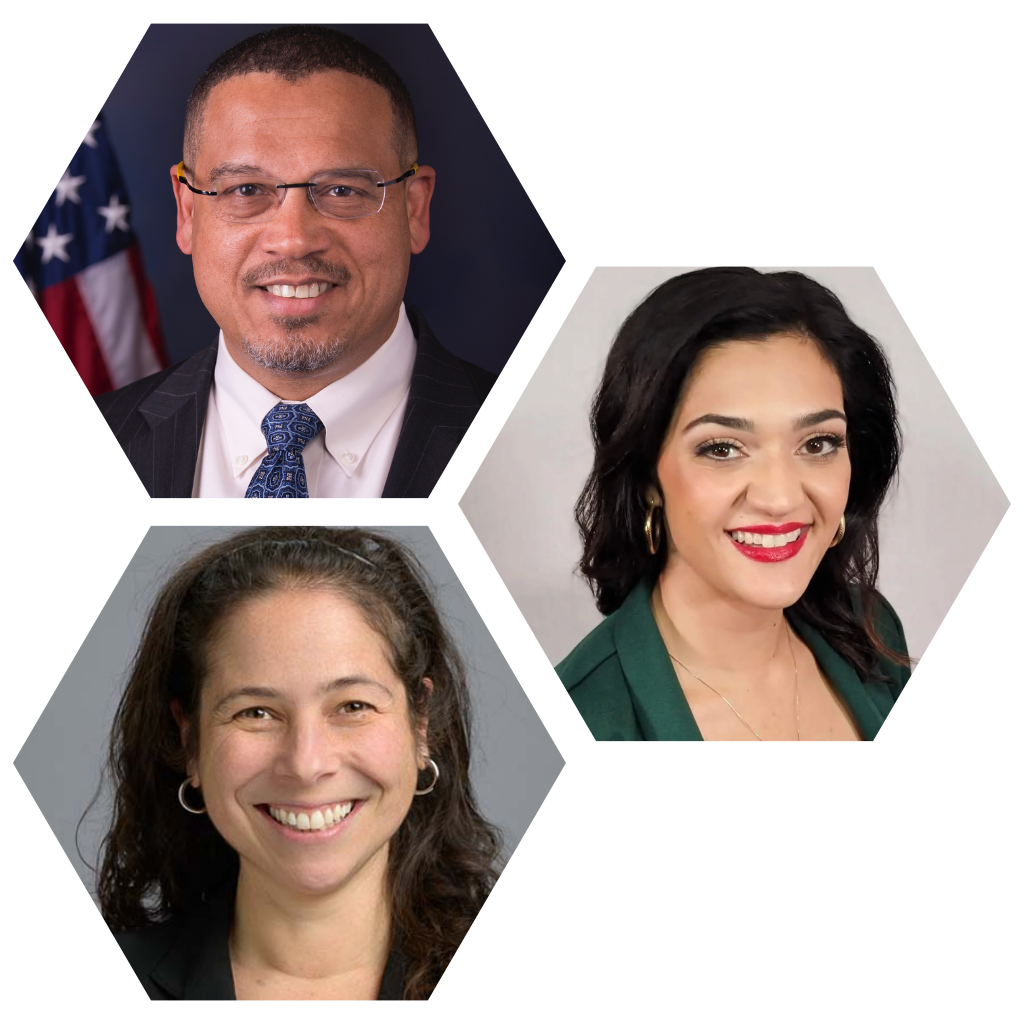 This convening is an opportunity to reflect the West Side's collective response back to those in positions of influence at the state and federal level. Grasstops representatives will hear direct testimony from impacted families, business owners, workers, and constitutional observers — the people who lived this, fought through it, and are still standing.
We are honored to have the presence of Attorney General Keith Ellison, State Representative Maria Isa Pérez-Vega, and Council Member Rebecca Noecker, with additional leaders to be confirmed. We look forward to hearing their response to community testimony and what steps they are committed to taking.
This is not a town hall. WSCO has intentionally selected community members to share their stories — centering the voices that matter most and ensuring this moment is led by those most affected.
Our neighborhood organized, protected, and persevered. Now we turn that into policy change.
Day 4: Environmental Justice on the West Side
Some horrors don't need a haunted house. They live in our environment — right here on the West Side.
For more than a year, West Side residents have been doing the hard, quiet work of organizing — knocking doors, sitting in living rooms, and realizing they are not alone in this.
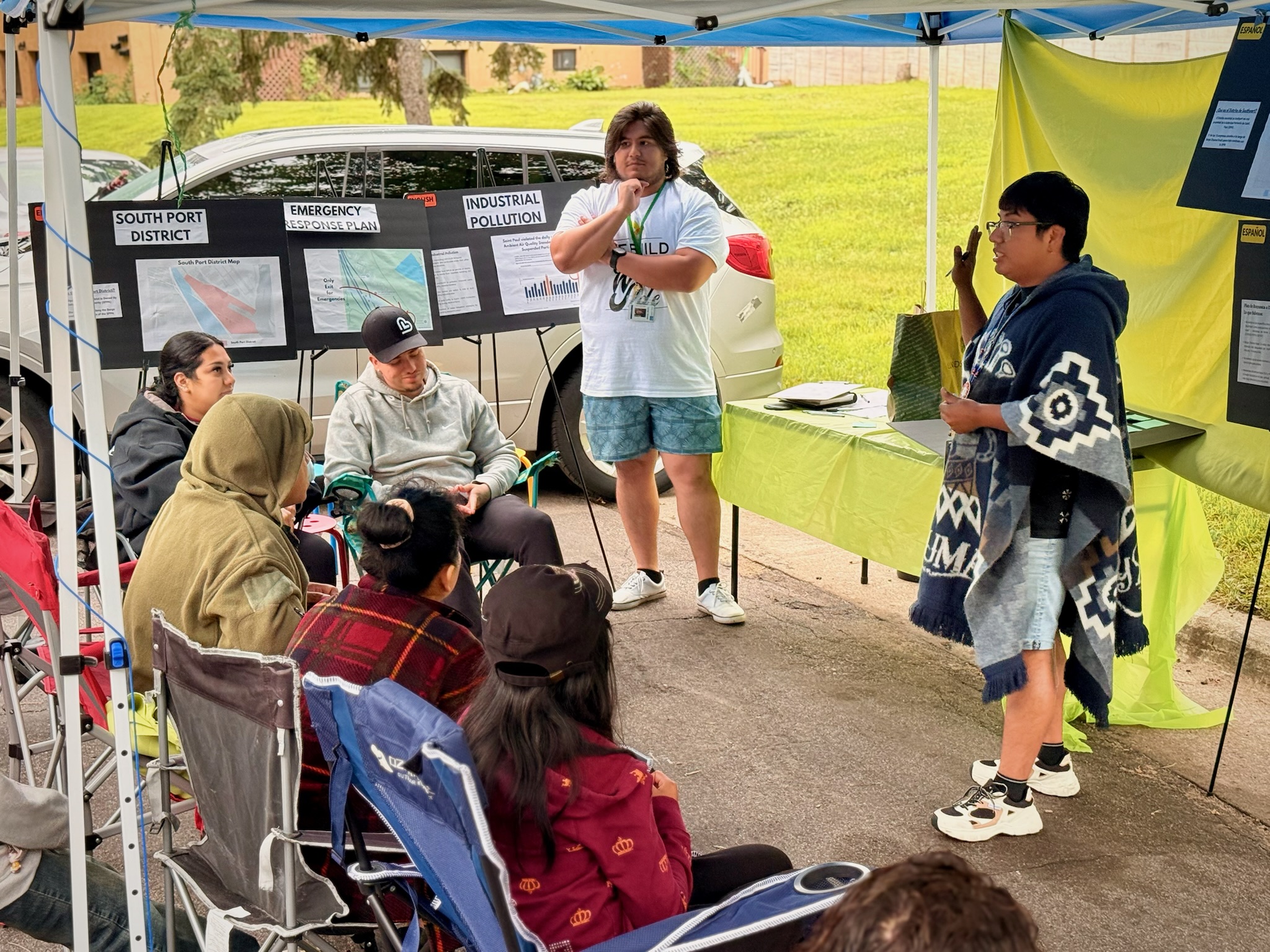 Residents who live near the Southport industrial area are breathing air that state agencies agree is hazardous. Industrial activity blocks the only roads in and out of our neighborhood with idling trucks, spewing diesel emissions and creating congestion that can last hours. It has been nearly ten years since a study documented these hazards and recommended action.
On Friday, May 1, a neighborhood tour — designed and led by the residents who have spent a year organizing for this moment — will bring this reality into view. It's an opportunity to hear firsthand stories, walk the sites, and understand what West Siders are demanding next.
From the bluffs to the flats, all West Side residents deserve clean air. When we come together, we can protect our health and our environment.
The West Side has known what it means to be overlooked for a long time.
Just over sixty years ago, hundreds of immigrants and working families were displaced from the West Side Flats—forced from their homes to make way for a riverfront industrial park. It was an erasure carried out quietly, without national headlines, without much outside attention at all. The emotional and cultural wound of that displacement never fully healed. And a painful industrial footprint left behind continues to harm the very community it displaced — visible today in the hazardous air quality near the Southport industrial area.
This is the context in which the West Side organizes. Not as newcomers to struggle, but as a community with a long memory of what happens when outside forces make decisions about our neighborhood — and when the rest of the world isn't watching.
When the nation turned its attention to Minnesota during Operation Metro Surge, much of that focus landed on Minneapolis. Understandably so—what unfolded there was significant, and the stories that emerged deserved to be told. But across the river, on Saint Paul's West Side, another community was quietly living through its own version of the crisis — organizing, protecting neighbors, and holding each other together.
The West Side Week of Action is about breaking this cycle of invisibility. It is a week-long declaration of who we are and what we're fighting for. It is what community organizing looks like when it's rooted in love, sustained by commitment, and backed by years of showing up for each other. The West Side has been doing this work long before this week, and we'll be doing it long after.
The West Side is BUILT BY US: Our Money, Our Power, Our Future.
For months now, West Side businesses have been struggling. For some, the customers they typically serve have been too afraid to leave their homes, deeply impacting sales. On multiple occasions now, businesses have been forced to close their doors on days when it simply felt too unsafe to operate.
Our small businesses are the heartbeat of the West Side neighborhood. They are what make our neighborhood vibrant, resilient, and culturally rich. Many of them hold deep historical and community significance. These businesses already survived the 2020 pandemic, but at that time there were federal and state resources available. Those same safety nets do not exist in this moment of crisis for our state.
Now more than ever, we need to support our small businesses.
At the height of when our community was under attack, big corporations did not stand with us or protect us. Time and again, they’ve shown where their loyalties lie, and it’s not with our neighbors, our workers, or our families.
But we are not powerless.
We have power in our actions.
We have power in our voices.
And we have power in our dollars.
That’s why we launched the Built By Us campaign. Built By Us is a simple idea with powerful potential: when we choose to spend our money locally, we strengthen the neighborhood we all share. Every purchase at a West Side business helps keep a family afloat, keeps a storefront open, and keeps the character of our neighborhood alive. This hyper-local movement calls on all West Side residents to shop within our community as much as possible.
Built By Us is comprised of several initiatives designed to strengthen and uplift the West Side business community:
↳ One of the first steps we've completed is create a comprehensive directory of all small businesses on the West Side. Our goal is to make it as easy as possible for residents to find exactly what they need right here in our neighborhood, whether it’s a place to eat, a service they rely on, or a new shop to discover. The directory will help connect neighbors with the incredible businesses that already exist just down the street.
↳ Every month, we'll be spotlighting West Side businesses across our communications platforms, sharing their stories, highlighting the people behind them, and encouraging the community to show their support.
↳Another key part of this effort is continuing to raise resources for the West Side Small Business Support Fund, which provides direct assistance to local businesses facing financial challenges.
↳ Finally, we’ll be inviting community members to pledge to the Built By Us movement – to commit to supporting West Side businesses whenever possible. Small choices add up. When we intentionally spend our dollars locally, we help build a stronger and more resilient neighborhood for everyone.
For too long, our money has flowed out of our neighborhood and into systems that harm us. It’s time to stop funding our oppressors and start funding each other. This movement is about making the transactional transformational. When we keep our dollars here, we build resilience. We protect our businesses. We strengthen our community.
Watch the campaign launch video on our social media!
Tik-Tok |
|
|
Neighbors leading campaign for a safe and healthy Southport
Southport is a forgotten place.
Southport is noisy, isolated, and neglected.
Southport is full of air pollution, dirt, and traffic jams.
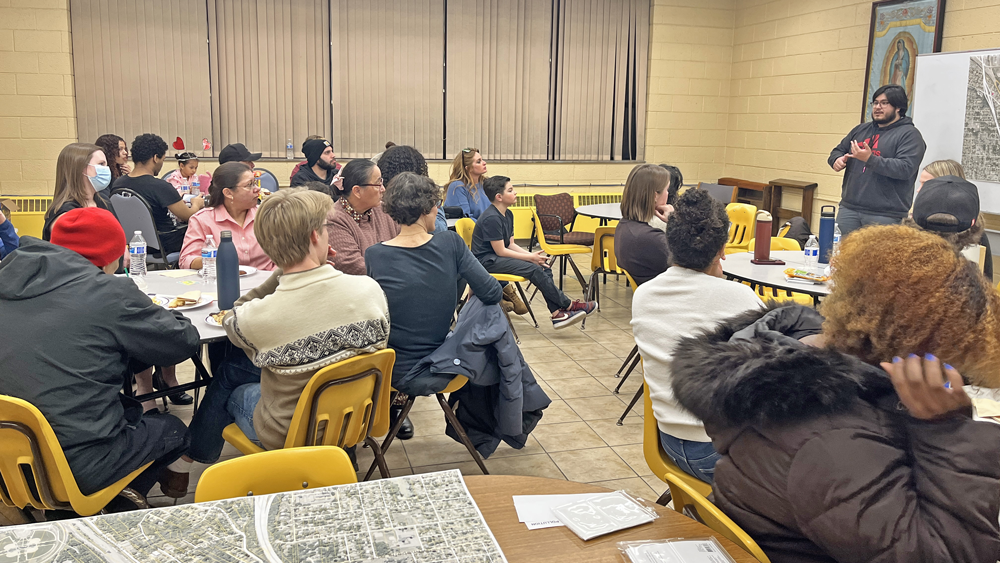
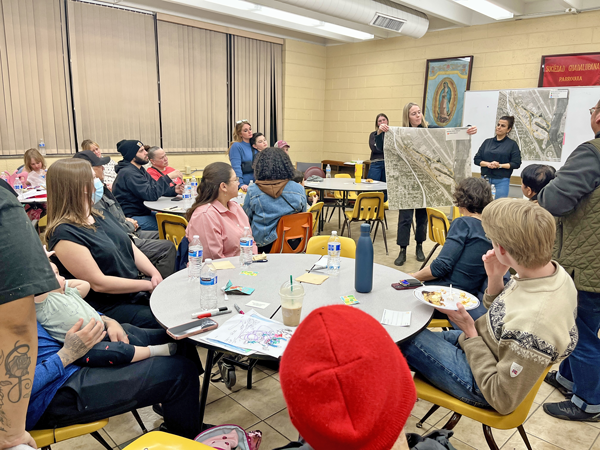
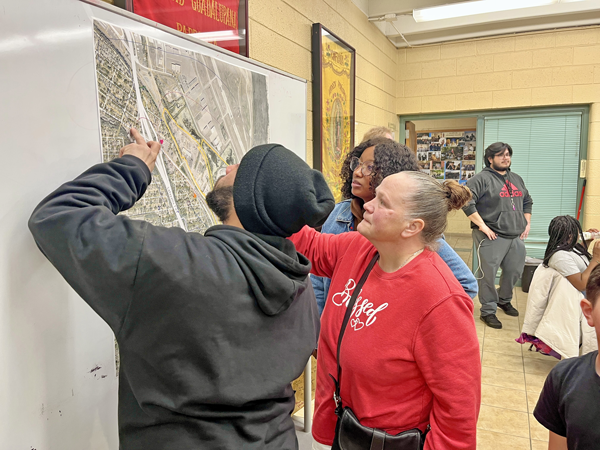
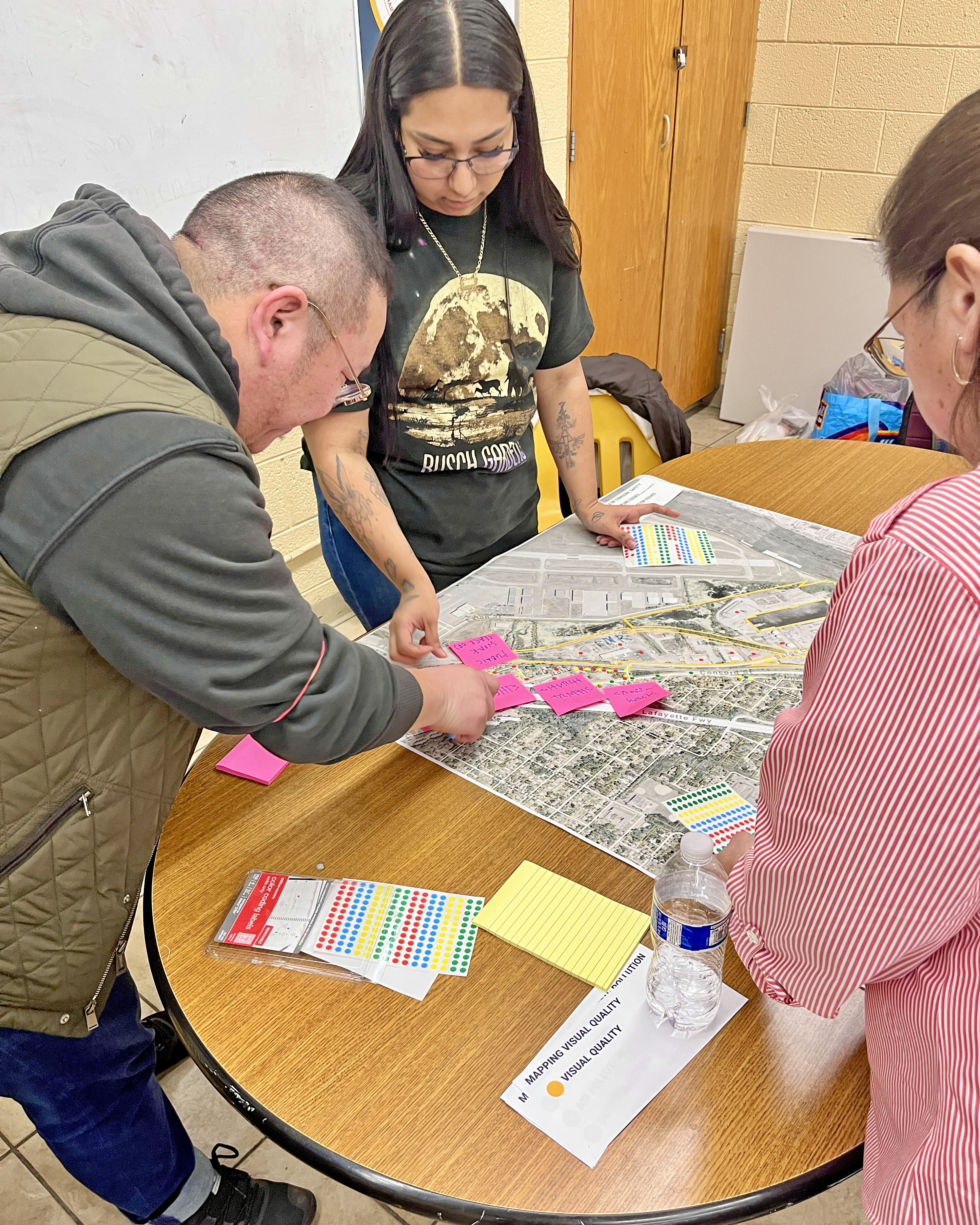
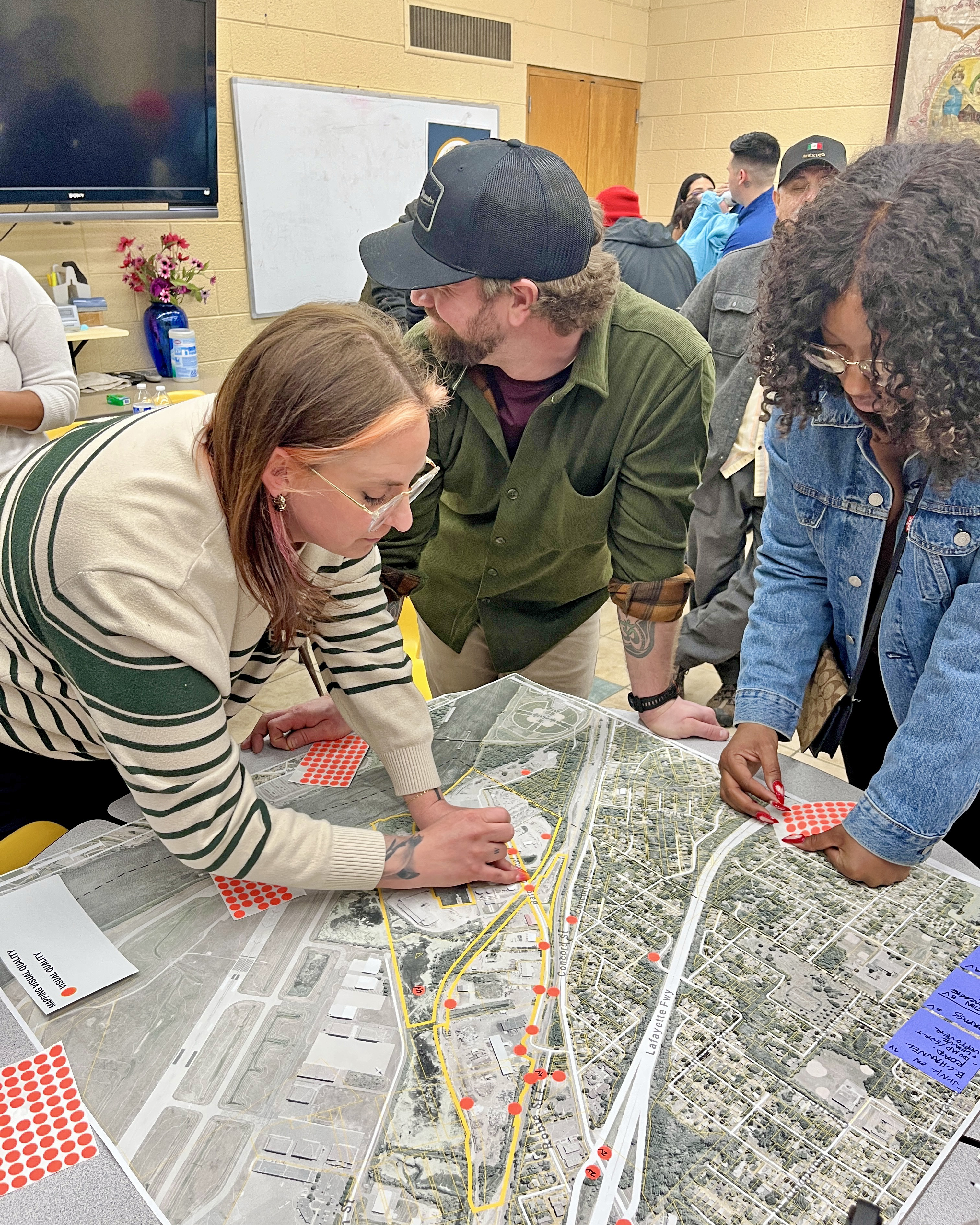
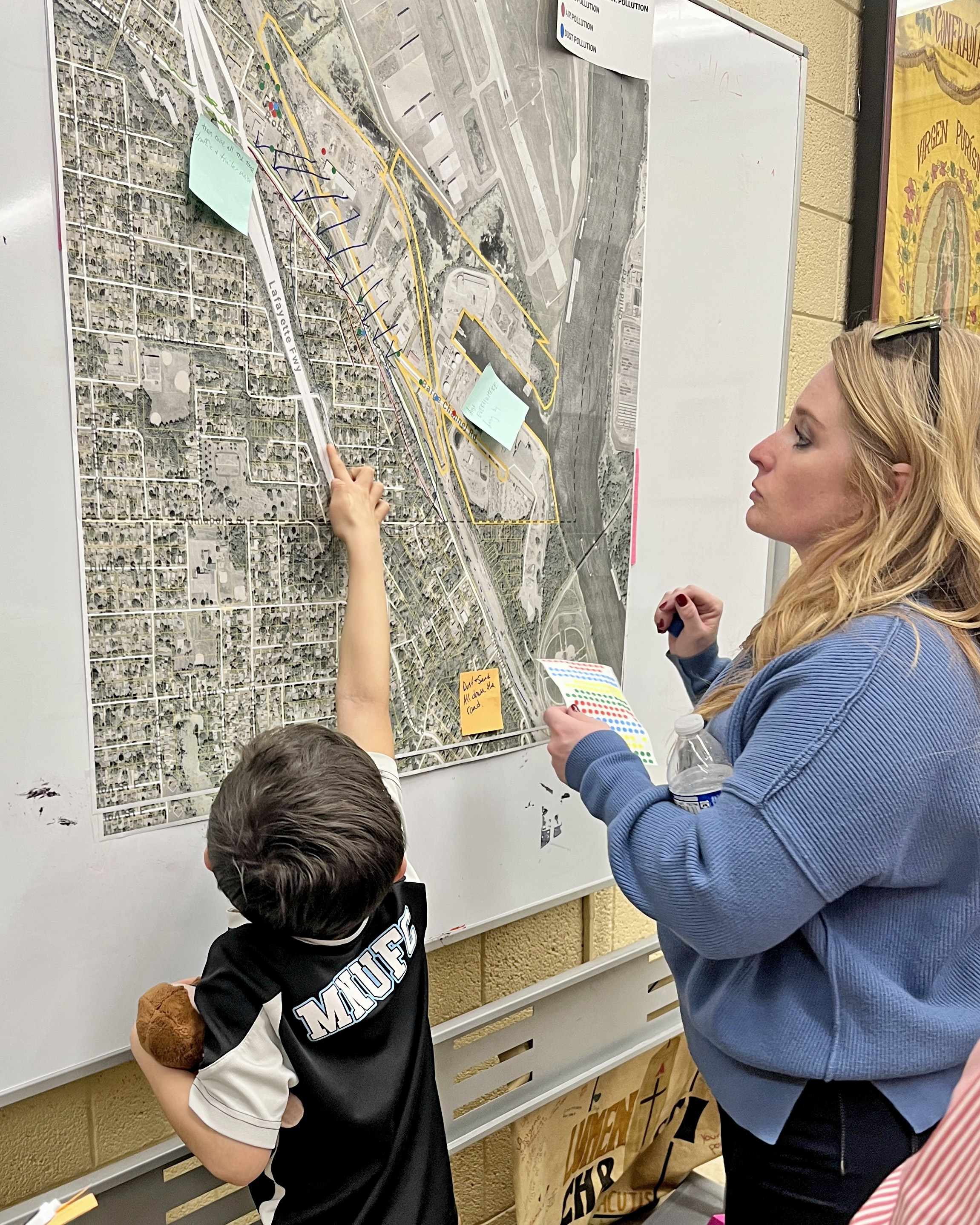
On a recent Friday evening, more than 20 West Side residents filled a room at Our Lady of Guadalupe church, placing stickers on oversized maps and sharing their experiences of life in the Southport neighborhood. While they represented different ages and backgrounds — Latine, Black, Asian and white, from pre-teens to elders — the group had common concerns.
Southport is loud and dusty.
Southport is my home, but also my greatest fear, because I constantly worry about the health of my kids.
Guided by staff from the University of Minnesota Design Center, the group wrote on notecards to describe what Southport is — and what it could be. They examined large maps and put hearts on the places they love and dots on sources of noise, pollution or traffic hazards. And, perhaps most importantly, they connected with neighbors to recognize and build their collective power.
For decades, West Side neighbors have been mobilizing against environmental harms and public health hazards surrounding the Southport Industrial District. With more than a dozen businesses on the 99-acre site, the district destroyed a diverse, vibrant neighborhood when the City of Saint Paul displaced residents of the West Side Flats to make way for private profit.
Since the 1970s, traffic in and out of Southport has steadily increased — trucks, barges, major highway, and rail all converging on an area that is also home to families, a school, and a church. Over the years, neighbors have come together to win important campaigns, blocking an asphalt plant, stopping a car shredding facility and advocating for the planting of more trees.
Now, Southport neighbors are coming together again, with a community-led vision and campaign for the place they call home.
 |
 |
For more than a year now, WSCO organizers, like Miguel Brito, have been knocking doors and having conversations with Southport neighbors. Those conversations have led many — like Elkin, who bounced a toddler on his legs at the mapping event — to recognize they aren’t alone in their fear and frustration about the air quality and emergency access.
“We've seen the surface, but we never knew what was going on underneath,” he said. “We thought it was just us experiencing these things. So that's when we went to the first community meeting and everybody's like, oh, a lot of people are feeling the same exact way.”
In 2025, WSCO convened a table of neighborhood leaders who have been meeting consistently and identifying common concerns. They’ve revealed that Southport neighbors are breathing air that state agencies agree is hazardous — and the zip code has asthma rates that are twice as high as that of the city and state. They’ve confirmed that Southport residents can be cut off from emergency services — like ambulances and fire trucks — for hours when private companies block access to the roads in and out of their neighborhood. And they’ve learned that it’s been nearly 10 years since the release of the Southport Industrial District Study that not only documented hazards but recommended actions.
Working with WSCO, they’ve also taken action together. In recent months, they’ve secured new, active air quality monitors; distributed safety and emergency equipment to area residents; and laid out a powerful, community-led plan to make sure everyone in the Southport community can breathe easy.
 |
 |
 |
In 2026, they’re taking their campaign public, amplifying their demands to elected leaders and local businesses. Their goals? Create a neighborhood emergency evacuation plan, ensure environmental regulators regularly report to the public on air quality results, explore a dust mitigation ordinance, and enforce compliance with City ordinances on noise, dust, and traffic emissions.
“Your neighbors have been working very hard to build a foundation for change,” Miguel told the group at the mapping event. “This is an environmental justice issue, and these things don't go quickly. But your neighbors have pushed this word forward at a tremendous rate.”
In the packed room at Our Lady of Guadalupe church, the energy to keep pushing forward was clear. New neighbors learning about the campaign for the first time and leaders who have been meeting for months had a shared love for Southport — and a shared vision for the future.
Southport could be a beautiful place to live.
Southport could be safe, healthy, breathable, prioritized, and stress free.
Southport could be a place of sanctuary.
Learn more about the campaign and stay tuned for how West Siders from other neighborhoods can contribute to this effort!
WSCO Statement on General Strike - January 23, 2026
For more than fifty years, the residents of Saint Paul’s West Side have come together to stand up for what matters most: our homes, our people, our shared future.
As a grassroots organization, many of our victories have been made possible through collective action and social movement strategies used by some of the greatest changemakers in history—like Martin Luther King, Jr., whose legacy our community honored just this week.
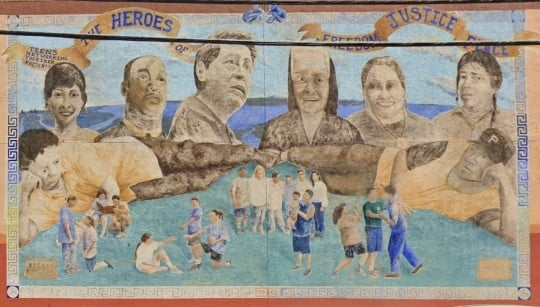
“The Heroes of Freedom, Justice, and Peace” Mural. Depicted from left to right: Diego Rivera, Aug San Suu Kyi, Martin Luther King Jr., Cesar Chavez, Sister Giovanni Gourhan, Rigoberta Menchú, Dennis Banks, Roberto Clemente
Strikes and boycotts have long been powerful tools to apply pressure, protect dignity, and demand justice when systems fail to do so on their own. West Side Community Organization stands in solidarity with all businesses, institutions, schools, and individuals who are willing and/or able to participate in the general strike tomorrow, January 23, 2026. We will continue to support strikes and peaceful collective actions that stand with our immigrant neighbors and their families.
We want every member of the West Side community to know this: you hold power. Through your dollars, your voice, and your actions. As your neighborhood organization, WSCO is here to support you in exercising that power and working toward the change you want to see. Always.
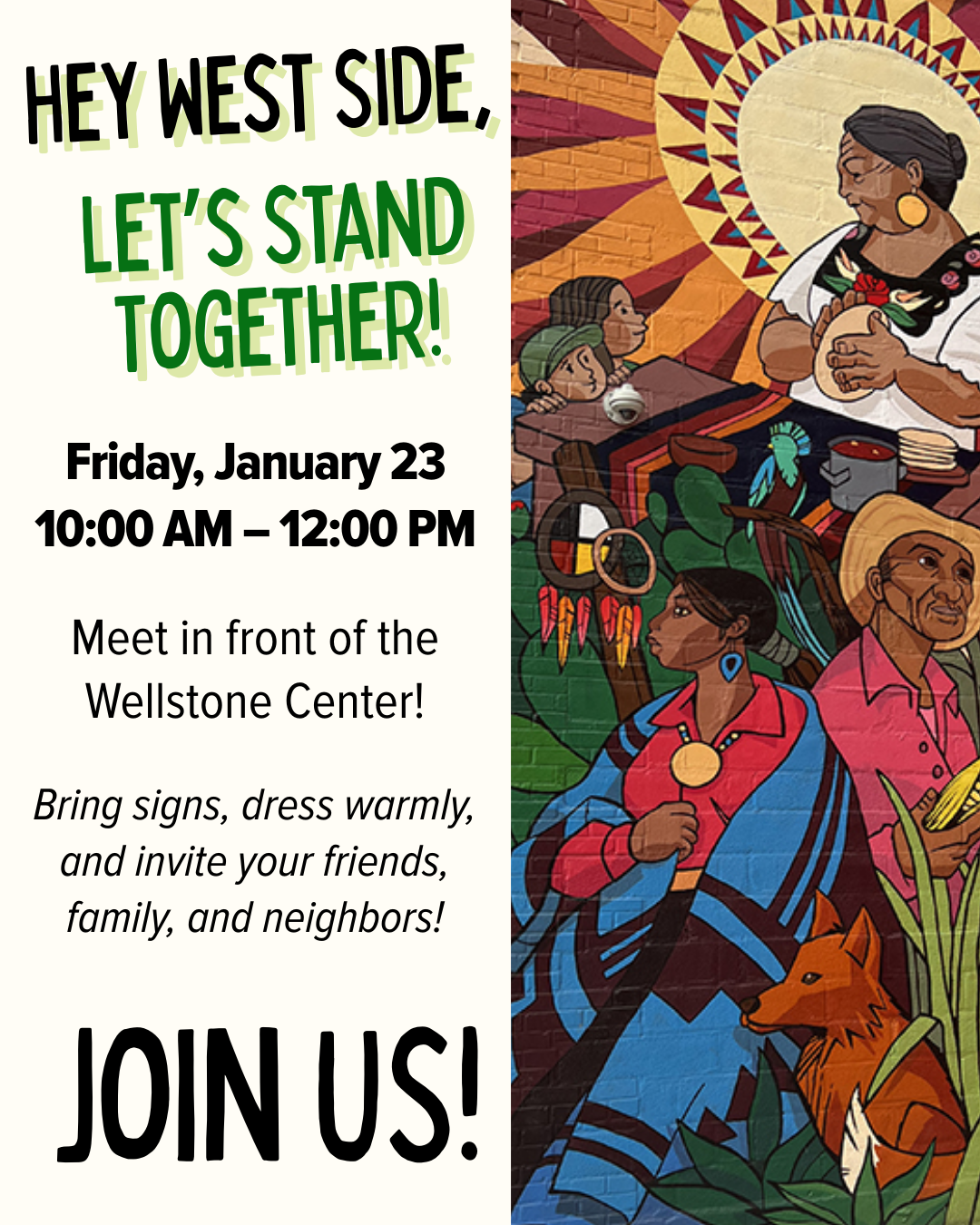
For West Side residents who wish to be in community tomorrow, we invite you to gather with us along the sidewalks of Cesar Chavez St. Together, we will peacefully demonstrate our support for our neighbors and for the families impacted by ICE activity.
Honoring the Flats: Reflections from the Inheritance Fund Verification Work
Hear from our Communications Coordinator, Julia, as she reflects on partnering with the City of Saint Paul to help verify descendants for the West Side Flats Inheritance Fund in 2025.
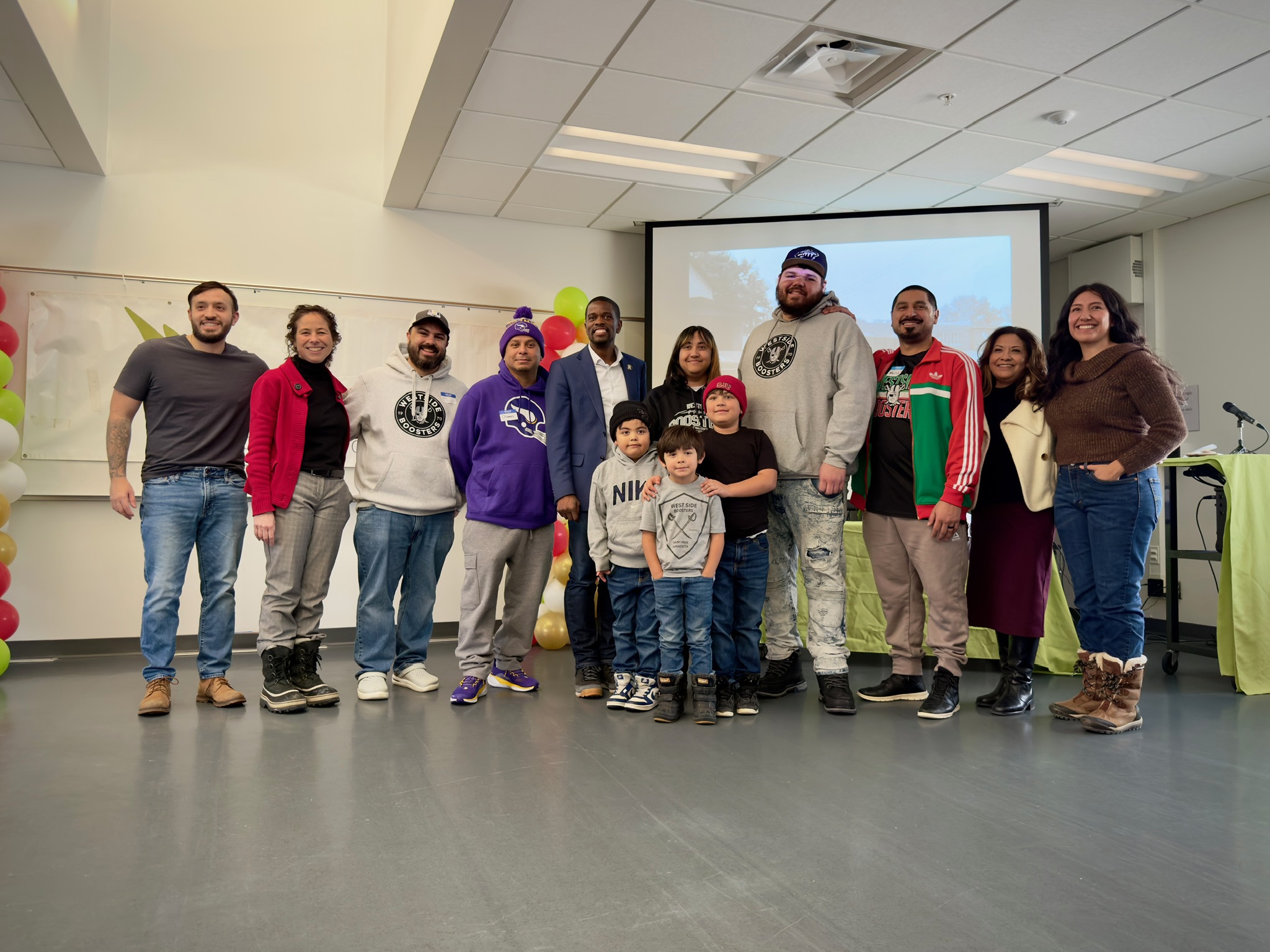
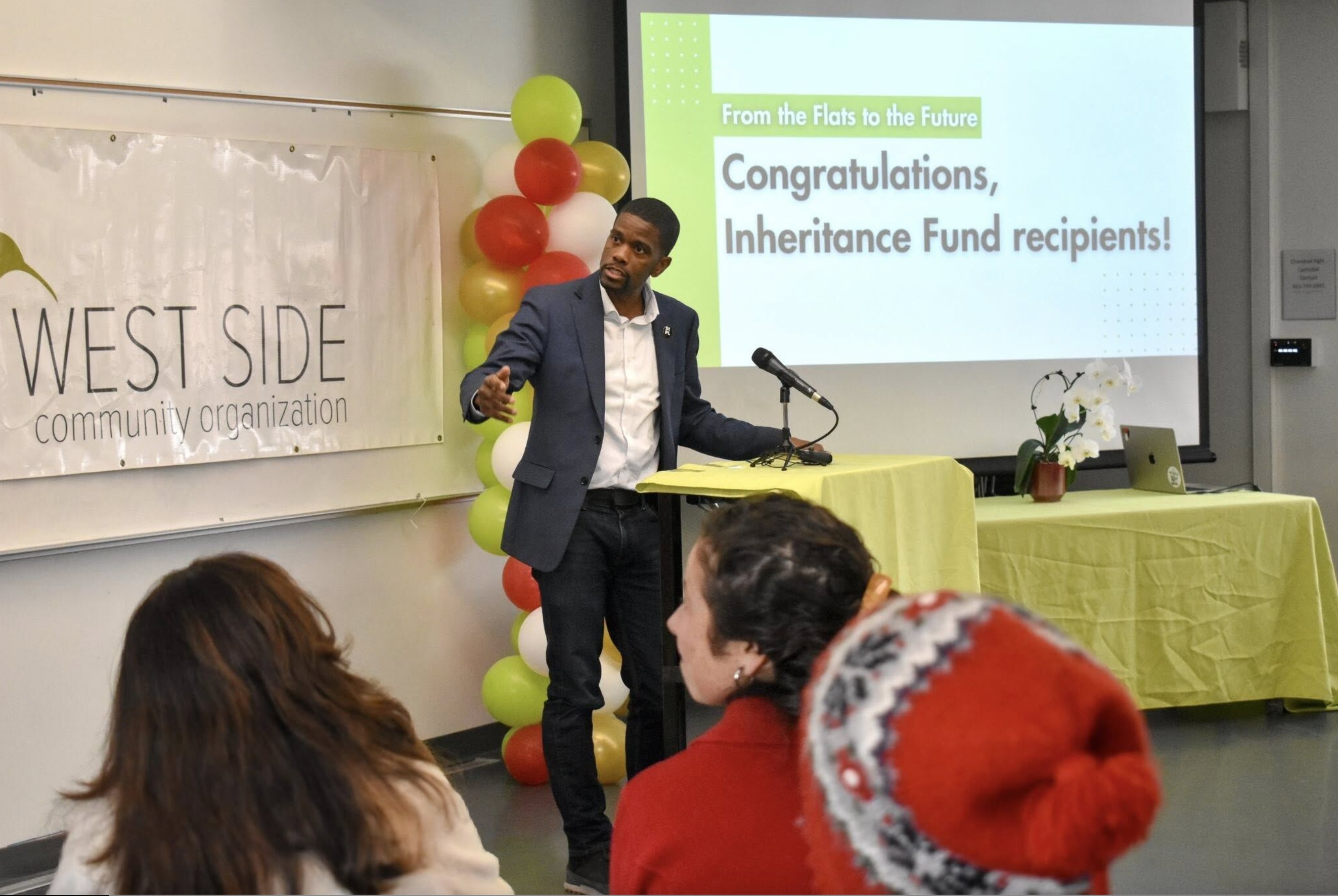
Four West Side Flats descendants have now received down payment assistance for a new home through the Inheritance Fund! This Sunday, WSCO was joined by Mayor Melvin W. Carter III, CM Rebecca Noecker, and Flats descendants to celebrate this meaningful milestone and to honor all those who made this moment possible.
I serve as the point person for descendant verification for the WS Flats Inheritance Fund. In this role, I worked closely with applicants and with the City to verify that each person was a direct descendant of a displaced WS Flats homeowner. This work is deeply personal to me. I come from a WS legacy family, and I am also a descendant of the WS Flats. My great-grandmother lived on the Flats, alongside many of my great-aunts and uncles.
As part of the verification process, I spent a lot of time combing through the Relocation Survey conducted by the City of St. Paul. In those records, you can see displacement not just as a policy decision, but as something that reached into people’s names, identities, and futures. You see evidence of assimilation, erasure, and survival in the smallest details.
For example, one of our recipients that applied for the Inheritance Fund listed his great-grandfather, Arturo Mendez, as his displaced ancestor. But when I searched for him in the survey, he didn’t appear under that name. Instead, I found him listed as “Arthur Mendel”. A clear anglicization. It’s a small change on paper, but it tells a much larger story about what families were navigating at the time: pressure to assimilate, to translate themselves into something more “acceptable".
I also saw language that reveals bias in the Relocation Survey. The way officials described people’s homes – and by extension, about the people themselves. Homes are described as “deplorable” or “atrocious.” Some buildings are described as “no value.” And one line that stuck with me said a building “if it were located in a “better demand area” could “almost double its income.” That language matters. Because when you label a home as worthless, when you paint a neighborhood as a problem, it becomes easier to justify removing it. Not repairing it. Not investing in it. Not listening to the people who are proud to live there.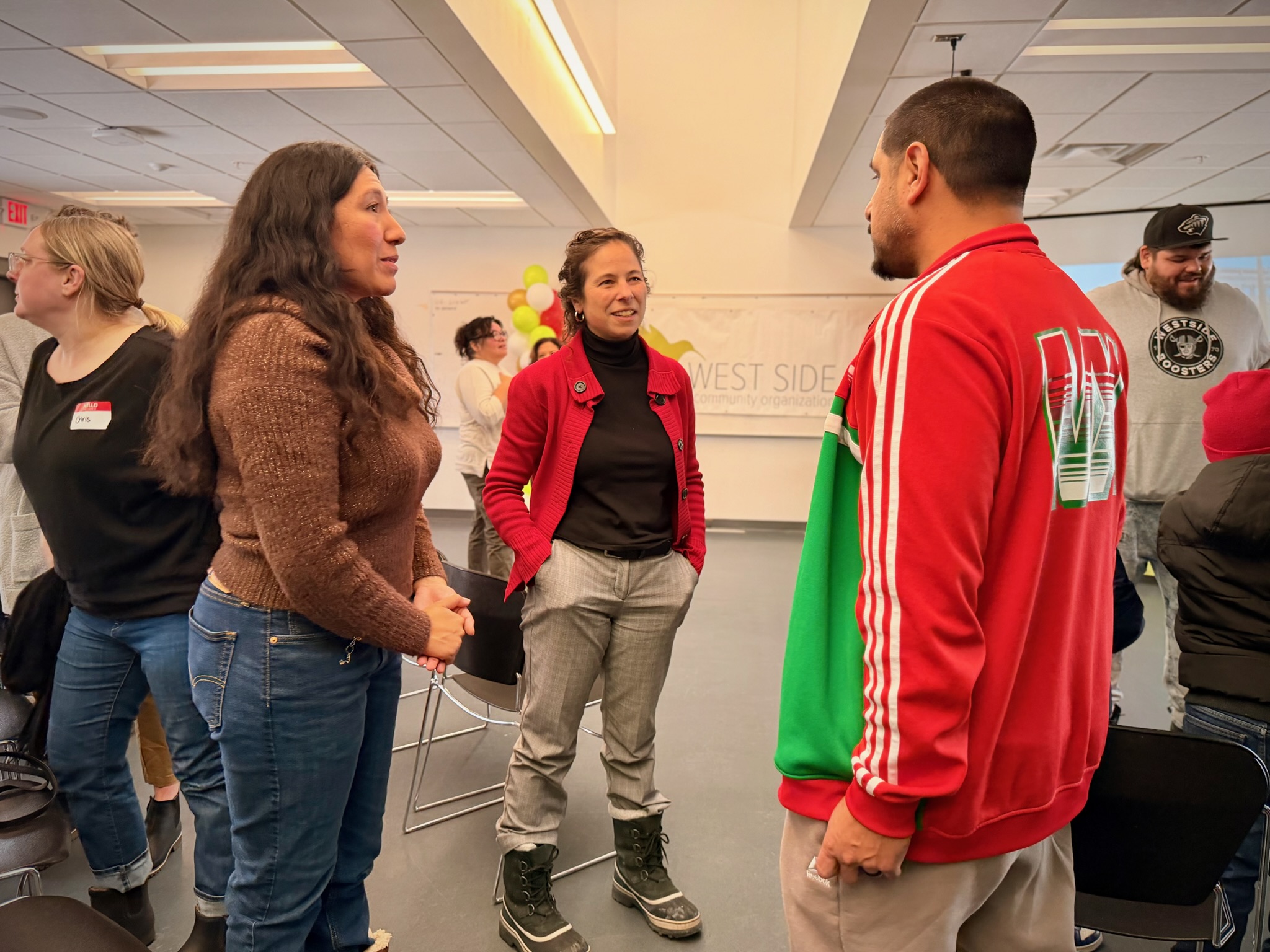
What has endured this displacement is not of “no value.” What endures are cherished memories and stories of a connected, diverse community that lives on through the West Side we know and love today. While the Inheritance Fund is a step toward repairing generational wealth loss, descendants widely feel it was developed without their involvement and fails to address the full scope of harm. Many community proposals center on expanding economic repair options to meet diverse needs. All of us at WSCO are fully committed to moving forward these proposals and toward meaningful memorialization of the West Side Flats.
In community,
Julia Diaz
Communications Coordinator
West Side Community Organization
We Keep Us Safe - A Statement on Immigration Enforcement from WSCO
West Side Community Organization is a community-based nonprofit that has served as the Saint Paul’s West Side (District 3) for over 50 years. We work alongside our residents to build collective power, advance justice, and ensure racial equity for all people in our community.
During these challenging times in our community, our city, and our state, it is more important than ever that we stay united, support one another, and protect our neighbors.
This morning, we received a report of a suspicious vehicle at El Burrito. Our team immediately arrived on site to ensure the safety of our community and to observe for any potential activity. Upon arrival, we identified two SUVs with tinted windows. After monitoring the situation, we confirmed that the individuals inside were simply having lunch. No enforcement activity took place.
We denounce the presence of all entities targeting immigrants and the current administration’s efforts to attack and criminalize communities of color. What we are witnessing is a system that punishes civilians not for wrongdoing – but for trying to work, raise families, and contribute to their communities. These efforts are not protecting anyone. They are destabilizing neighborhoods, tearing families apart, and spreading fear. It is a coordinated strategy to keep our communities from feeling safe, powerful, or connected. But our strength comes from standing together. Our strength comes from refusing to let these tactics divide us.
We want to encourage our community to continue observing carefully, verifying information, and getting trained so we can keep one another safe — while also avoiding unnecessary alarms. If you see any suspicious activity on the West Side (ZIP code 55107), call or text 612-946-8940. Let us always lead with the spirit of the Hummingbird: protecting our community with clarity, courage, and care.
WSCO calls on all neighborhood organizations and fellow District Councils: get organized. Build networks now. Mutual defense begins at the local level. If it can happen to one of our communities, it can happen to any community.
To our West Side community, we recommend the following:
↳ Stay connected to us for our Hummingbird Initiative meetings, trainings, and resources. Sign up for our newsletter to be the first to know of any upcoming activities, or reach out to [email protected].
↳ Connect with the Minnesota Immigrant Rights Action Committee (MIRAC). Follow them on social media. Sign up for their emails. Attend their trainings, so you’re prepared to safely respond to activity in your neighborhood.
We invite this to be our community mantra:
We refuse to be intimidated.
We refuse to let our neighbors be taken in silence.
We refuse to let fear define who we are.
We protect each other.
We look out for each other.
We will show up – again, and again, and again. Because when we say all our families matter, we mean it.
Sincerely,
The WSCO Team.
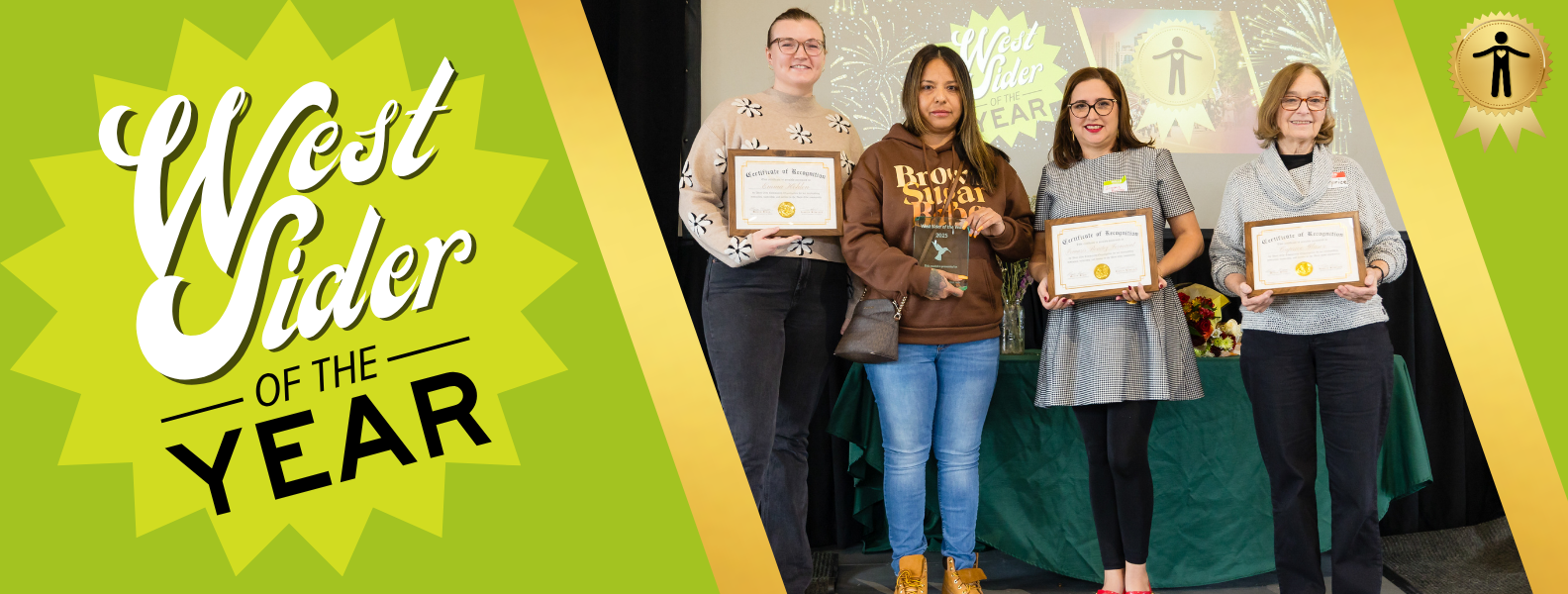
West Side Awards 2025: Nominees and Winners!
At this year’s WSCO Annual Meeting, we took a moment to celebrate the people and businesses who make the West Side shine. From passionate teachers and dedicated neighbors to thriving local businesses, the West Side Awards honor those who go above and beyond to build a stronger, more connected, and more loving community.
Below you’ll find all the nominees and winners recognized at the 2025 Annual Meeting – each one a reminder of the creativity, care, and commitment that make the West Side the best side.
Nominees
Capital Deals Bike Shop
Capital Deals keeps the West Side rolling — from late-night rescue repairs to hosting neighborhood rides and scavenger hunts, Alex and his team go above and beyond to keep people moving and connected.
Icy Cup
A true neighborhood staple, Icy Cup brings people together with warmth and kindness — a place where everyone is welcome, and every visit feels like catching up with friends.
Beautiful Laundrette
More than a laundromat, Beautiful Laundrette is a hub for creativity, compassion, and justice — showcasing local artists, hosting free legal clinics, and supporting those in need with open hearts and open doors.
Backstory Coffee
Backstory Coffee reflects the true spirit of the West Side — welcoming, down-to-earth, and community-centered, serving great coffee with even greater connection.
Fox Face Studio / HealHouse
Fox Face Studio and HealHouse offer more than beauty and wellness — they create space for healing, growth, and community, where everyone is celebrated for showing up as their full selves.
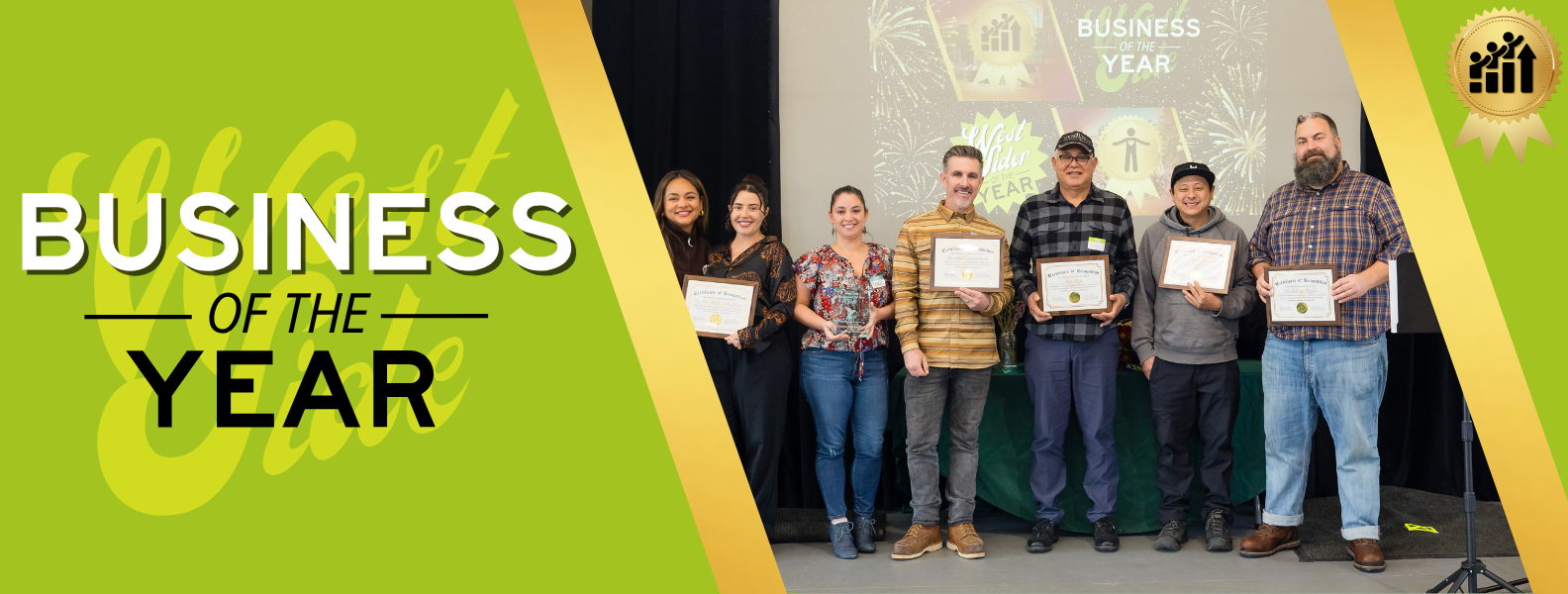
And the 2025 West Side Business of the Year goes to…
Crasqui Restaurant
Crasqui is more than a restaurant – it’s a gathering place, a cultural bridge, and a beacon of community pride. Chef Soleil Ramírez has created a space that celebrates Venezuelan heritage through extraordinary food, while using her platform to uplift the Latin community across the West Side. Throughout 2025, Crasqui has raised funds for local nonprofits, hosted collaborations that spark dialogue around immigration, and provided a safe, welcoming space for neighbors, leaders, and friends to connect. Chef Soleil’s dedication, creativity, and heart embody the values of the West Side – where good food, good people, and shared purpose come together to build something beautiful.
Nominees
Julieta Guerrero
With quiet dedication and boundless heart, Julieta tends the gardens that make our neighborhood bloom. Whether she’s caring for plants or people, she gives freely of her time and love — a humble, steady presence who makes the West Side more beautiful every day.
Irmaris Benitez
As a kindergarten teacher at Riverview Immersion School, Irmaris brings patience, joy, and warmth to the very start of our children’s learning journeys — shaping futures with care and helping each student feel seen and capable.
Emma Hohlen
A teacher and advocate at Humboldt High, Ms. Emma leads with energy, compassion, and commitment. She shows up for her students in the classroom and beyond — supporting athletes, families, and our community’s future leaders with unwavering dedication.
Robert Cruz
Robert puts his heart into the West Side — showing up, speaking up, and putting action behind his love for this community. His energy and commitment reflect the best of what it means to be a West Sider.
Caprice Glaser
An artist, organizer, and advocate, Caprice uses creativity to strengthen our neighborhood’s identity — from shaping public art to standing up for its preservation. Her dedication ensures the West Side’s beauty, history, and voices continue to shine.
Sebastian Gonzalez Navarro (ineligible this year due to being a current Board Member, but still recognized)
Sebastian’s leadership and passion for connection are unmatched — from organizing with neighbors to protecting our schools, he pours his energy into building a stronger, more united West Side for everyone.
And the 2025 West Sider of the Year goes to…
Toni Molinar
Toni Molinar is the West Side. A lifelong neighbor, organizer, and mentor, she’s the driving force behind so many of the events and traditions that bring our community together — from Cinco de Mayo to Dia de los Muertos and West Side Boosters games. Toni shows up for her neighbors, especially the youth — making sure kids feel supported, protected, and proud of where they come from. She leads with heart, courage, and love, using her voice to speak up for what’s right and encouraging others to do the same. Toni embodies the true spirit of the West Side: strong, giving, and always ready to lift others higher. Her leadership reminds us that community isn’t just a place — it’s the people who care enough to keep it thriving.
From the Flats to the Future Community-Led Visions for Belonging and Repair
From the Flats to the Future: Community-Led Visions for Belonging and Repair is a proposal developed in August 2025 through input from West Side Flats descendants. The proposal builds directly on the first three recommendations from the Racial Equity Impact Analysis (RIA) report on the West Side Flats:
-
Acknowledgment and memorialization of the displacement
-
Economic remedies for displaced families and their descendants
-
Neighborhood belonging for displaced residents, their descendants, current residents, and future residents
In October 2025, West Side Community Organization (WSCO) and West Side Flats descendants presented this proposal to representatives from several City of Saint Paul departments—including Planning and Economic Development (PED), Public Works, Parks and Recreation, and Councilmember Rebecca Noecker’s office—to begin discussing the feasibility of advancing these recommendations.
Click below to read the full proposal.